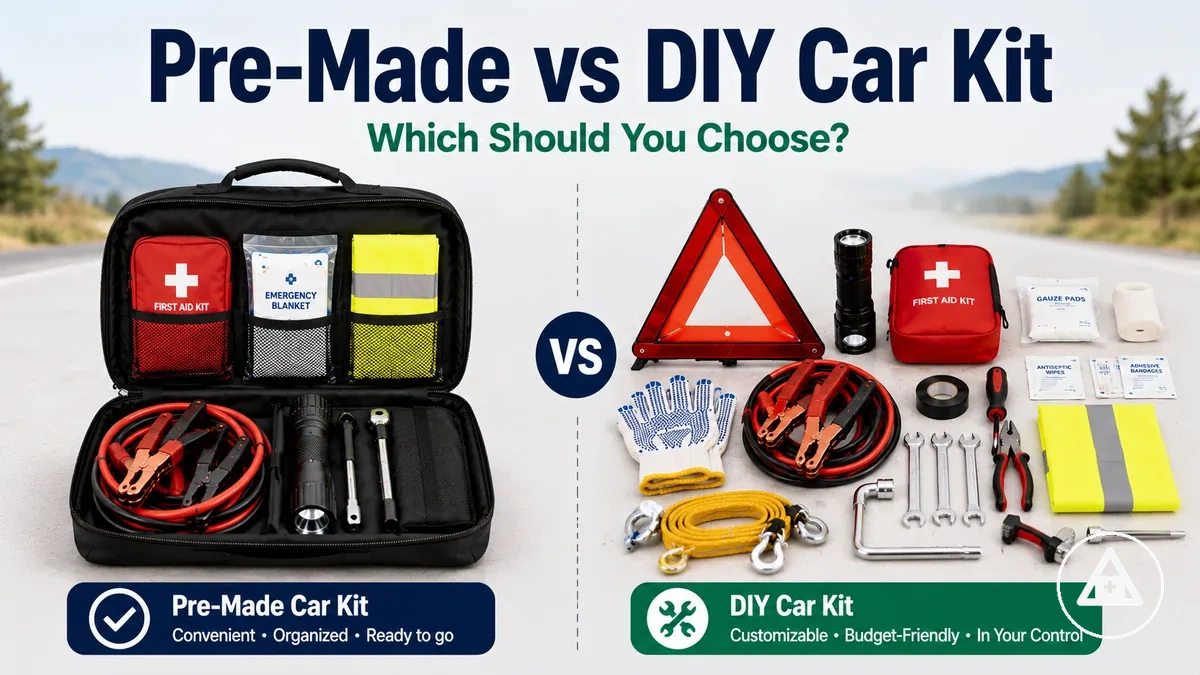
Pre-made vs DIY car emergency kits
Pre-made vs DIY car emergency kits compare faster readiness with greater control over emergency supplies. A pre-made car emergency kit usually reduces setup effort, while a DIY car emergency kit usually gives more customization over coverage, storage, upkeep, cost, and value.
A driver comparing buying versus building often wants to avoid two weak outcomes: a roadside bundle that looks ready but misses the driver’s situation, or a custom kit that has better intent but poor upkeep. A ready-made kit can suit someone who wants a prepared starting point. A build-your-own kit can suit someone who wants to choose items by vehicle use, driving pattern, storage space, and replacement responsibility.
A pre-made car emergency kit is a pre-assembled roadside emergency kit, while a DIY car emergency kit is built from selected emergency supplies and usually needs an organizer or storage bag. For broader context before comparing these routes, the main car emergency kit guide explains the wider role of kit contents, readiness, and roadside use. The next comparison starts by separating how the two kit types differ in assembly, control, completeness, and upkeep.
This comparison does not replace a full checklist, contents guide, features review, or cost page. It frames the buying-versus-building decision first, so later sections can evaluate coverage, item quality, storage, replacement items, and hidden effort without turning the page into a product catalogue.
How pre-made and DIY car emergency kits differ
Pre-made and DIY car emergency kits differ by assembly, item selection, readiness, completeness, control, replacement flexibility, and coverage consistency. A pre-made kit starts as a ready roadside bundle, while a DIY kit starts as a custom supply build. The first split is assembly and control.
A pre-made kit is a pre-assembled option that groups emergency supplies before the driver evaluates the contents. A DIY kit is a self-selected car emergency kit built from chosen items, so the driver controls what goes in, what gets replaced, and how gaps are handled. Both approaches can support roadside readiness, but the same preparedness goal is reached through different paths.
The comparison below separates the two approaches by the attributes that affect real use. It does not declare a product winner, because completeness, item quality, and upkeep depend on the contents, condition, and checking routine.
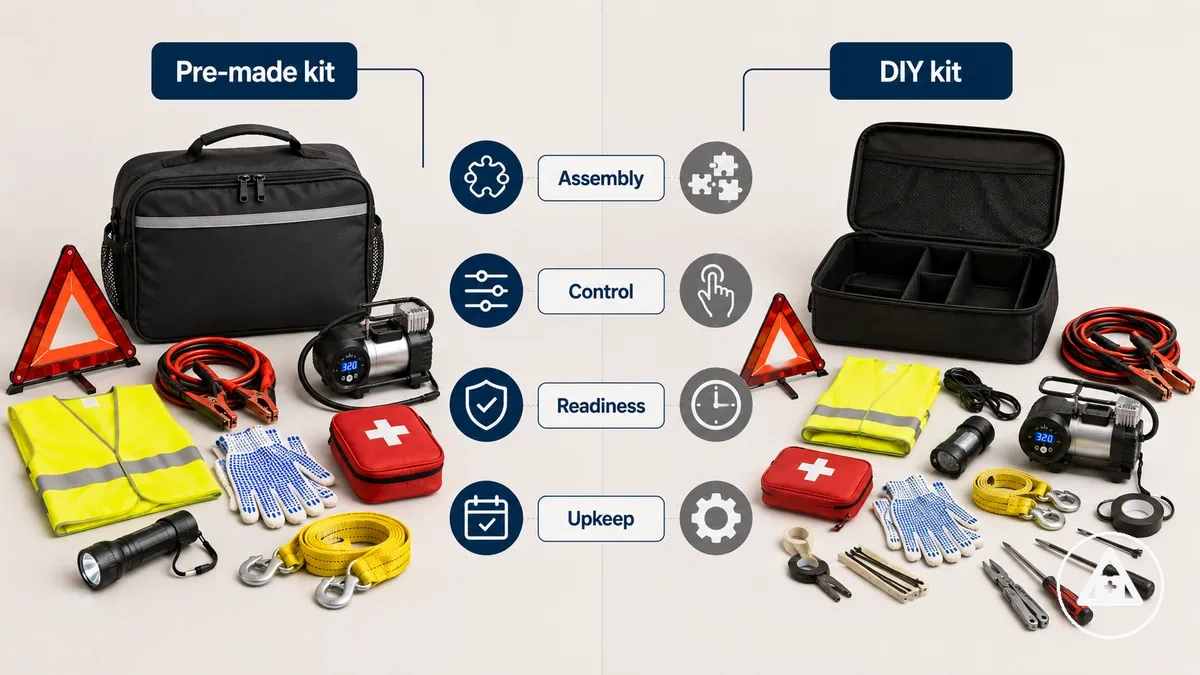
| Attribute | Pre-made kit | DIY kit |
|---|---|---|
| Assembly | Usually arrives as a ready roadside bundle with items already grouped. | Requires the driver to choose, gather, and organize the emergency supplies. |
| Item selection | Item selection is set by the bundle, so gaps may need upgrades. | Item selection stays under driver control, which can improve fit when the choices are maintained. |
| Readiness | Readiness can be faster when the included items match the driver’s needs. | Readiness depends on completing the build and checking missing or weak items. |
| Completeness | Completeness varies by included contents and may not cover every vehicle or trip situation. | Completeness depends on the driver’s checklist discipline and coverage decisions. |
| Upkeep | Upkeep still matters because expiry-sensitive supplies, batteries, and weak items may need replacement. | Replacement flexibility is higher, but the driver carries more responsibility for batteries, refills, and coverage consistency. |
Pre-made kits as ready roadside bundles
A pre-made kit is a ready roadside bundle that groups bundled supplies into a single organizer before it reaches the driver. The included items are assembled in advance and stored in a vehicle-ready format, which supports immediate readiness. The main local value of a pre-made kit is convenience.
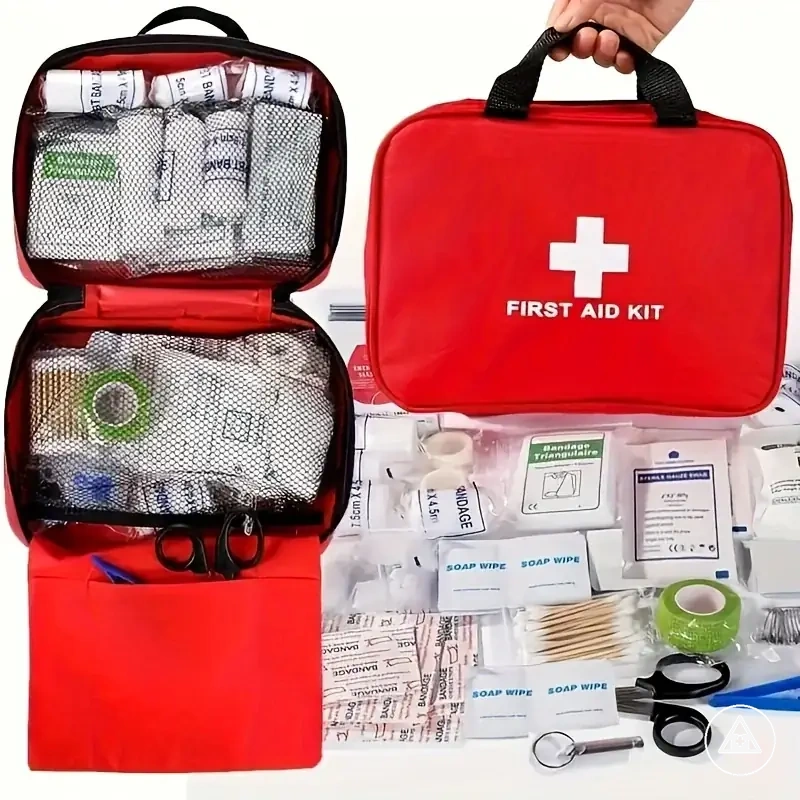
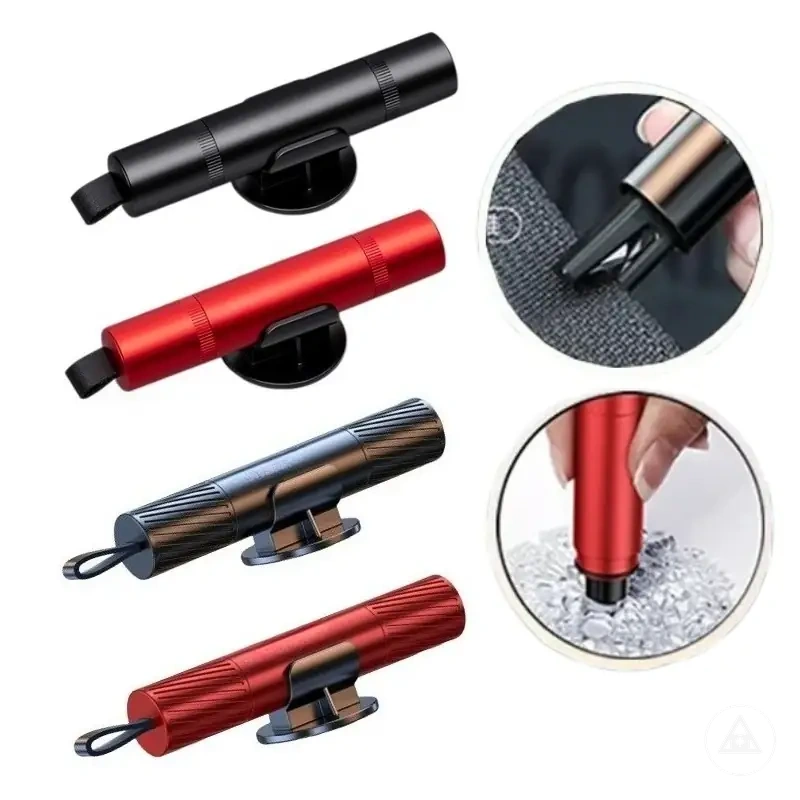
A pre-made roadside bundle can suit drivers who want emergency supplies available without gathering and organizing individual items first. The organized bag and visible safety items below demonstrate how bundled supplies are often arranged for storage and quick access. Included items and quality limits can vary, so readiness should be paired with a review of what the kit actually contains.
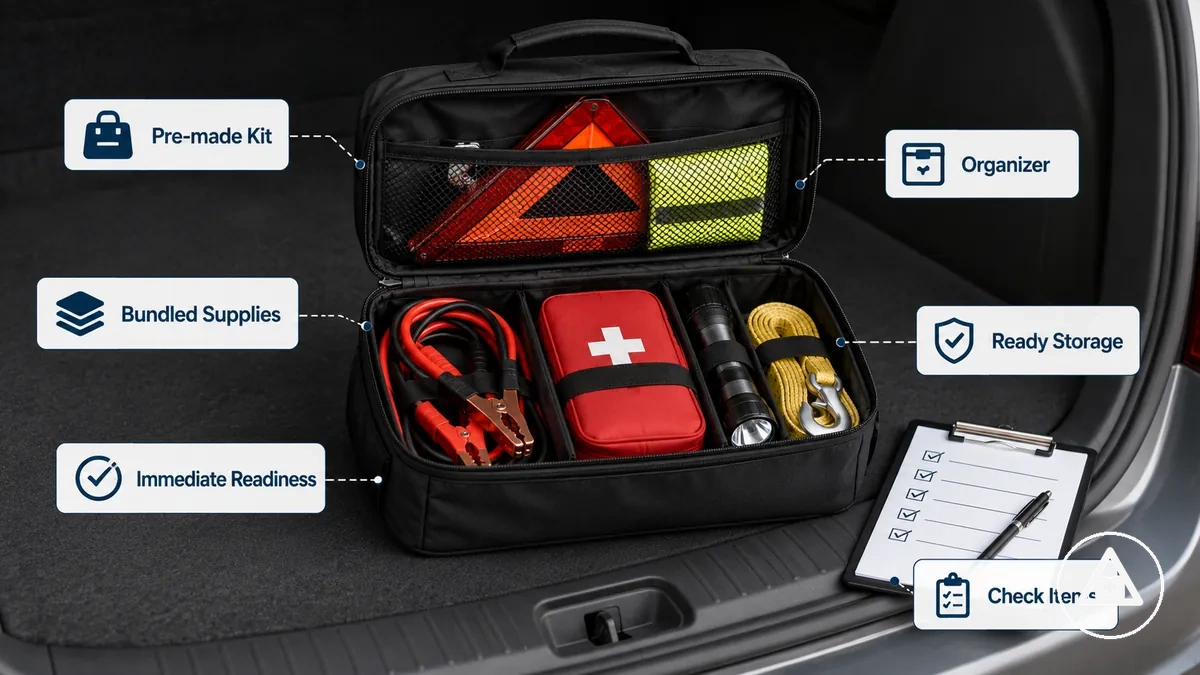
A ready-made kit does not automatically mean complete for every driver, vehicle, climate, or trip type. Coverage gaps, missing items, or lower-priority components may still require upgrades or replacements, which is why verifying included items remains important even when the bundle is ready to store.
DIY kits as custom emergency supply builds
A DIY kit is a custom emergency supply build that relies on self-selected supplies rather than bundled contents. The selected supplies, storage choice, and maintenance decisions are determined by the driver. The main local value of a DIY kit is control.
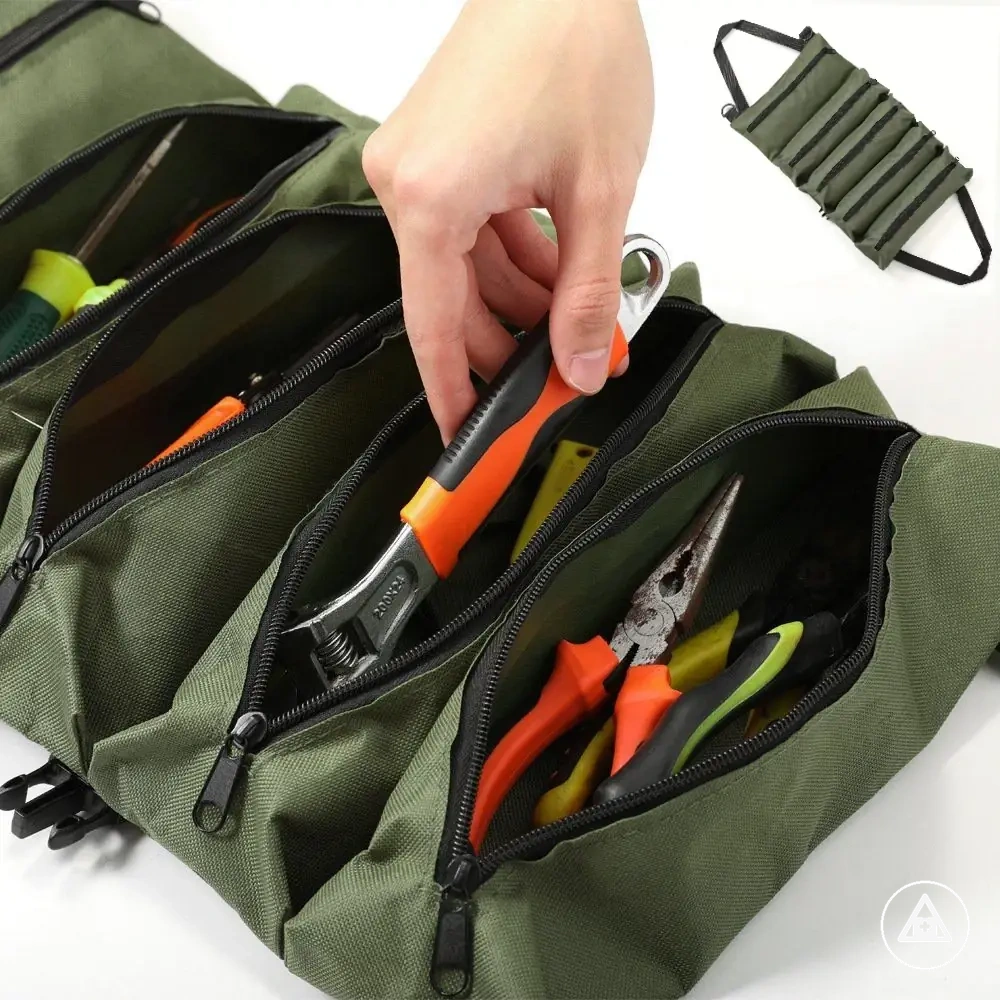
A DIY kit can suit drivers whose vehicle use, climate conditions, or driving patterns create different preparedness needs. The grouped supplies and empty organizer shown below demonstrate how customization can be arranged around specific coverage goals rather than a fixed bundle. Whether the selected supplies provide a better fit depends on supply choice, coverage control, and ongoing upkeep responsibility.
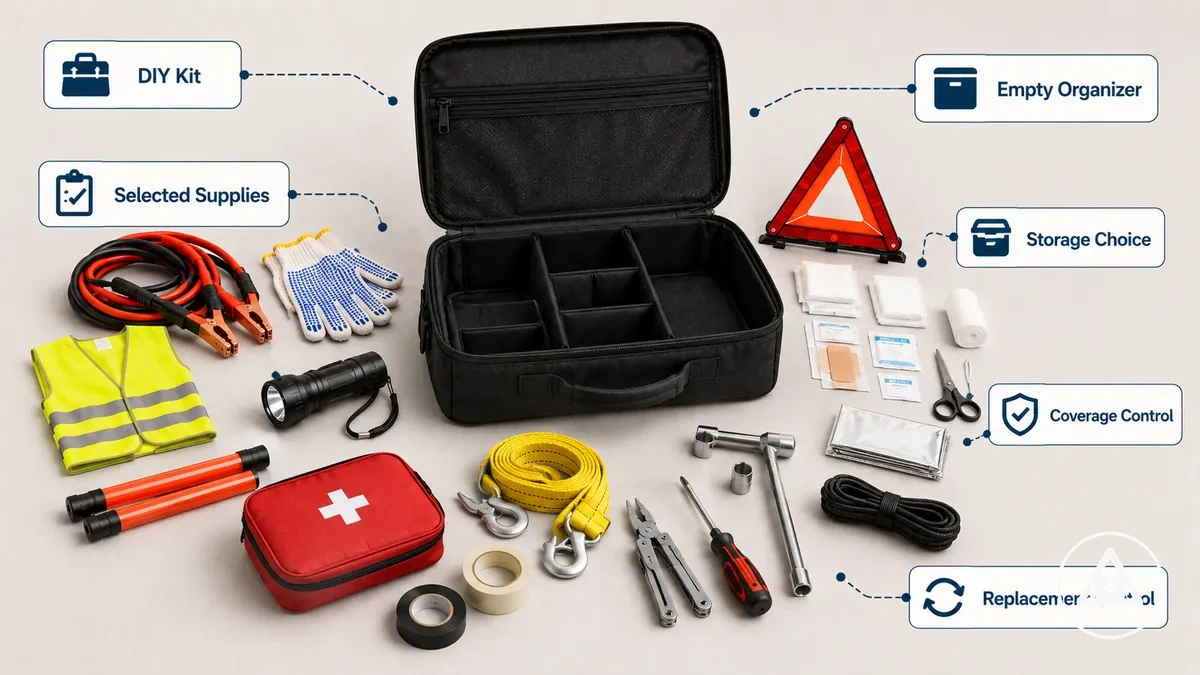
- Selected supplies are chosen according to individual driving needs and coverage priorities.
- An empty organizer or kit bag supports storage choice without determining the contents.
- Replacement control remains with the driver, including checks for batteries, expiry-sensitive items, and worn components.
- Coverage fit depends on how well the selected supplies match expected situations and maintenance habits.
A homemade roadside kit can use an empty organizer and still remain a DIY kit. The storage container does not make the kit pre-made; the defining feature is that the supplies are selected and maintained by the driver.
Baseline emergency coverage both kit types need
Both pre-made and DIY car emergency kits still need the same baseline emergency coverage. The choice between kit types should be evaluated only after essential coverage needs are addressed. Baseline emergency coverage starts with safety items and visibility.
Baseline emergency coverage organizes each supply group by function rather than by a long list of products. Safety items, visibility, first aid, lighting, minor tools, and storage each contribute to roadside readiness in different ways. Exact contents may vary by driver, vehicle, and travel conditions, but the function of each supply group remains the key evaluation criterion. Roadside readiness depends on both coverage and the condition of the core supplies.
The table below summarizes baseline emergency coverage using supply group, function, acceptable condition, and readiness effect. For deeper evaluation of items a kit should include, use that resource as a supplementary contents reference rather than an exhaustive list.
| Supply Group | Function | Acceptable Condition | Roadside Readiness Effect |
|---|---|---|---|
| Safety items | Support roadside awareness and basic protection. | Accessible and suitable for emergency use. | Can support safer roadside response. |
| Visibility | Help make the vehicle or situation easier to notice. | Functional and ready to use when needed. | Supports visibility during roadside stops. |
| First aid | Provides basic emergency care supplies. | Items remain present and in usable condition. | Supports preparedness for minor incidents. |
| Lighting | Provides illumination when visibility is limited. | Lighting devices and power sources remain functional. | Helps maintain readiness in low-light conditions. |
| Minor tools | Assist with practical roadside tasks. | Tools remain usable and accessible. | Can support simple roadside problem-solving. |
| Storage | Keeps emergency item groups organized and accessible. | Organizer or storage solution remains serviceable. | Supports faster access to core supplies. |
Completeness, quality, and replacement control
Completeness, item quality, and replacement control should be evaluated separately when comparing a pre-made kit with a DIY kit. A kit may appear well equipped but still contain missing, weak, expired, or unsuitable components. Replacement control determines how easily those issues can be corrected over time.
A pre-made kit may provide broader coverage from the start, while a DIY kit may provide greater control over item selection and replacement flexibility. Neither approach guarantees stronger item quality because material durability, expiry-sensitive supplies, batteries, first aid components, and tool reliability depend on the condition of the individual items. Item condition remains an important part of roadside readiness regardless of kit type.
The criteria table below separates completeness, item quality, and replacement control into practical evaluation signals. When a component is missing, expired, damaged, or difficult to replace, an upgrade may be more appropriate than accepting the limitation.
| Criterion | What to Evaluate | Condition or Risk | Upgrade Signal |
|---|---|---|---|
| Completeness | Coverage depth across important supply groups. | Missing items can create coverage gaps. | Upgrade when an important supply group is absent or limited. |
| Item quality | Material durability and overall item condition. | Weak or damaged items may reduce practical usefulness. | Upgrade when condition raises doubts about dependable use. |
| Expiry-sensitive supplies | Condition of supplies that can degrade over time. | Expired or deteriorated items can reduce readiness. | Replace when condition or expiry status is uncertain. |
| Batteries | Battery condition and replacement accessibility. | Weak or depleted batteries may limit lighting readiness. | Replace when battery condition appears unreliable. |
| First aid components | Presence and condition of essential first aid supplies. | Missing or degraded components can reduce preparedness. | Refill or replace when components are incomplete or worn. |
| Tool reliability | Usability and condition of practical roadside tools. | Unreliable tools may not perform as expected. | Upgrade when wear, damage, or poor construction affects confidence. |
| Replacement control | Ability to refill, replace, or improve individual items. | Limited replacement flexibility can leave known weaknesses unresolved. | Prefer a replacement path that supports ongoing maintenance. |
A simple example is replacing a weak flashlight battery or a damaged first aid component rather than keeping it solely because it is already included. For deeper evaluation of features to compare, use feature-level criteria to assess whether an item should be upgraded, supplemented, or replaced.
Convenience, readiness, and upkeep effort
Convenience matters only when the kit stays ready after the first purchase or build. A pre-made kit can reduce setup time, while a DIY kit can increase checking responsibility because more choices remain with the driver. Upkeep effort is the counterweight to initial readiness.
A driver who wants low-effort readiness may prefer a pre-made kit because the first setup step is usually simpler. A driver who wants maintained customization may prefer a DIY kit because selected supplies, batteries, expiry-sensitive items, and replacements can be controlled more directly. Neither route should be treated as ready by default, because forgotten-item risk increases when checking frequency, battery checks, or expiry management are ignored.
The comparison below separates immediate preparedness from sustained readiness. Use it to decide whether lower setup time or stronger upkeep control matters more for the way the kit will actually be maintained.
| Criterion | Pre-made kit | DIY kit | Readiness effect |
|---|---|---|---|
| Setup time | Can be shorter because items are already grouped. | Can be longer because supplies must be selected and organized. | Lower setup time helps only if included items are still checked. |
| Checking frequency | Still needs a checking routine for weak, missing, or expired items. | Usually needs more deliberate checking because item choices vary. | Regular review helps reduce forgotten-item risk. |
| Replacement effort | Replacement effort depends on how easily individual items can be swapped. | Replacement effort depends on the driver’s refill and maintenance habits. | Readiness improves when worn or missing items are replaced promptly. |
| Expiry management | Expiry-sensitive supplies may need review even in a ready bundle. | Expiry-sensitive supplies depend on the driver’s tracking discipline. | Expired or deteriorated supplies can reduce practical readiness. |
| Battery checks | Lighting readiness depends on whether batteries remain usable. | Battery checks remain the driver’s responsibility for selected lighting items. | Battery failure can weaken readiness in low-light situations. |
Storage, organization, and empty kit bag fit
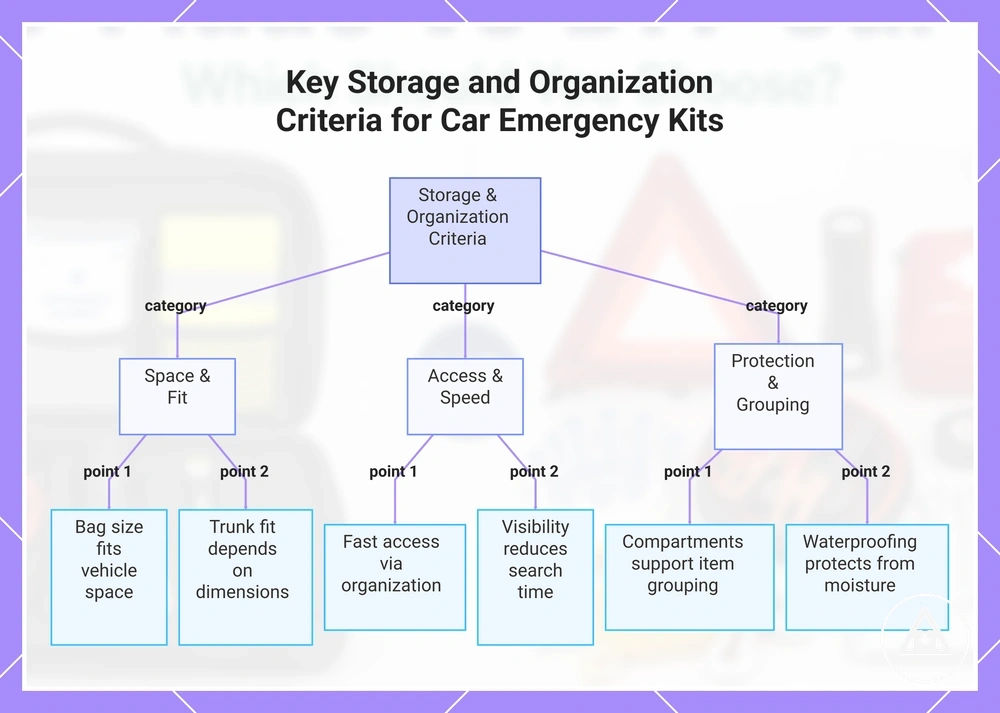
Storage format and organization affect whether a car emergency kit stays usable in the vehicle. A well-organized kit can improve access to supplies, reduce time spent searching for items, and make better use of available vehicle space. Usability depends on both access and space.
A pre-made kit often includes an organizer and a predefined storage format, which can simplify item grouping from the start. A DIY kit may use an empty kit bag, allowing compartments and layout choices to be adjusted around specific needs. Trunk fit, visibility, waterproofing, and bag structure depend on the storage bag, its contents, and available vehicle space. Effective organization supports clearer item separation.
The checklist below highlights storage and organization criteria that influence access, separation, and space use. These criteria help compare kit formats, but storage location guidance belongs elsewhere.
- Bag size: The storage bag should fit available vehicle space without making access difficult.
- Compartments: Separate compartments can improve item grouping and support fast access.
- Visibility: A kit bag that is easy to identify may help reduce search time when supplies are needed.
- Waterproofing: Protection from moisture depends on bag material, condition, and closure design.
- Fast access: Consistent organization can make frequently needed items easier to reach.
- Item grouping: Keeping related supplies together can improve usability and item separation.
- Trunk fit: Fit depends on bag dimensions, contents, and available vehicle storage space.
This chart groups the main criteria that affect the usability of a car emergency kit's storage and organization into three categories: space and fit, access and speed, and protection and grouping.
Cost and value when buying or building
Cost and value depend on coverage, quality, replacement, and time rather than upfront cost alone. Buying a pre-made kit and building a DIY kit can create different value tradeoffs because replacement items, quality control, and readiness effort may vary. Fixed-price certainty is not a reliable way to judge overall value.
A pre-made bundle may offer quicker readiness because key supplies are grouped from the start, but hidden replacement cost can appear when included items need upgrading or replacement. A DIY approach may increase build cost through selected DIY supplies and an empty organizer, yet it can provide more direct quality control over individual components. Time cost also differs because building, checking, and replacing items require effort that may affect long-term value. Value decisions often depend on upgrade needs.
The table below compares cost factors that influence buying and building decisions. Overall value depends on condition, replacement needs, and effort over time rather than a single cost factor.
| Cost factor | Pre-made kit | DIY kit | Potential value effect |
|---|---|---|---|
| Upfront cost | Usually tied to a complete bundle. | Depends on selected DIY supplies and an empty organizer. | Initial spending alone may not reflect long-term value. |
| Quality control | Quality varies by included components. | Quality can be influenced by item selection. | Better component choices may reduce future upgrade needs. |
| Hidden replacement cost | Replacement items may be needed when included supplies wear out or prove unsuitable. | Replacement expense depends on maintenance and selected components. | Future replacements can change the value tradeoff. |
| Time cost | Usually requires less setup time. | Often requires more effort to build and maintain. | Time investment may influence perceived value. |
| Upgrade needs | May require selective upgrades after purchase. | May require fewer upgrades when supplies are chosen deliberately. | Upgrade requirements can affect long-term value. |
For example, a pre-made bundle with a lower upfront cost may still require replacement items or upgrades later, while a DIY build with more deliberate quality control may reduce future changes. A broader cost and value comparison can help when evaluating those tradeoffs.
Which kit type fits different driving needs
Driving needs determine whether a pre-made kit, DIY kit, or hybrid kit is the better fit for a specific situation. The right choice depends on daily commuting, long drives, low-maintenance preference, customization needs, vehicle space, and readiness level. Selection should stay conditional rather than universal.
For daily commuting, a pre-made kit may suit drivers who want a ready bundle with less setup effort and a low-maintenance preference. A pre-made kit can simplify readiness because core supplies are already grouped and organized. When vehicle use is predictable and emergency preparation priorities are straightforward, convenience may matter more than extensive customization. These conditions often point toward a pre-made fit.
For long drives, customization needs may become more important because driving conditions, storage priorities, and coverage expectations can vary. A DIY kit allows supplies to be selected around vehicle-specific needs, while a hybrid kit combines a base bundle with targeted additions to address potential gaps. Vehicle space and organizer layout can also influence how supplies are grouped and accessed. These conditions often point toward a DIY or hybrid fit.
The decision matrix below compares common driving situations with the criteria that influence kit selection. Use it as a selection aid rather than a fixed recommendation, and see how to choose the right kit for a broader decision process.
| Driving situation | Primary criterion | Potential fit | Reason |
|---|---|---|---|
| Daily commuting | Readiness level and convenience | Pre-made kit | May support faster preparedness with less setup effort. |
| Low-maintenance preference | Reduced management effort | Pre-made kit | Can simplify organization and routine checks. |
| Long drives | Coverage flexibility | DIY kit or hybrid kit | May allow supplies to be adjusted for broader travel needs. |
| Customization needs | Control over selected supplies | DIY kit | Can support more tailored supply selection. |
| Limited vehicle space | Storage efficiency | Depends on storage format | Vehicle space and organization influence the best-fit option. |
| Balanced readiness and customization | Mixed priorities | Hybrid kit | Combines a base bundle with selected upgrades. |
No kit type is the right choice for every driver because driving context, readiness expectations, and maintenance habits differ. A pre-made kit, DIY kit, or hybrid kit can each be appropriate when matched to the conditions that matter most. The most useful decision usually comes from aligning the kit type with actual driving needs rather than a universal recommendation.
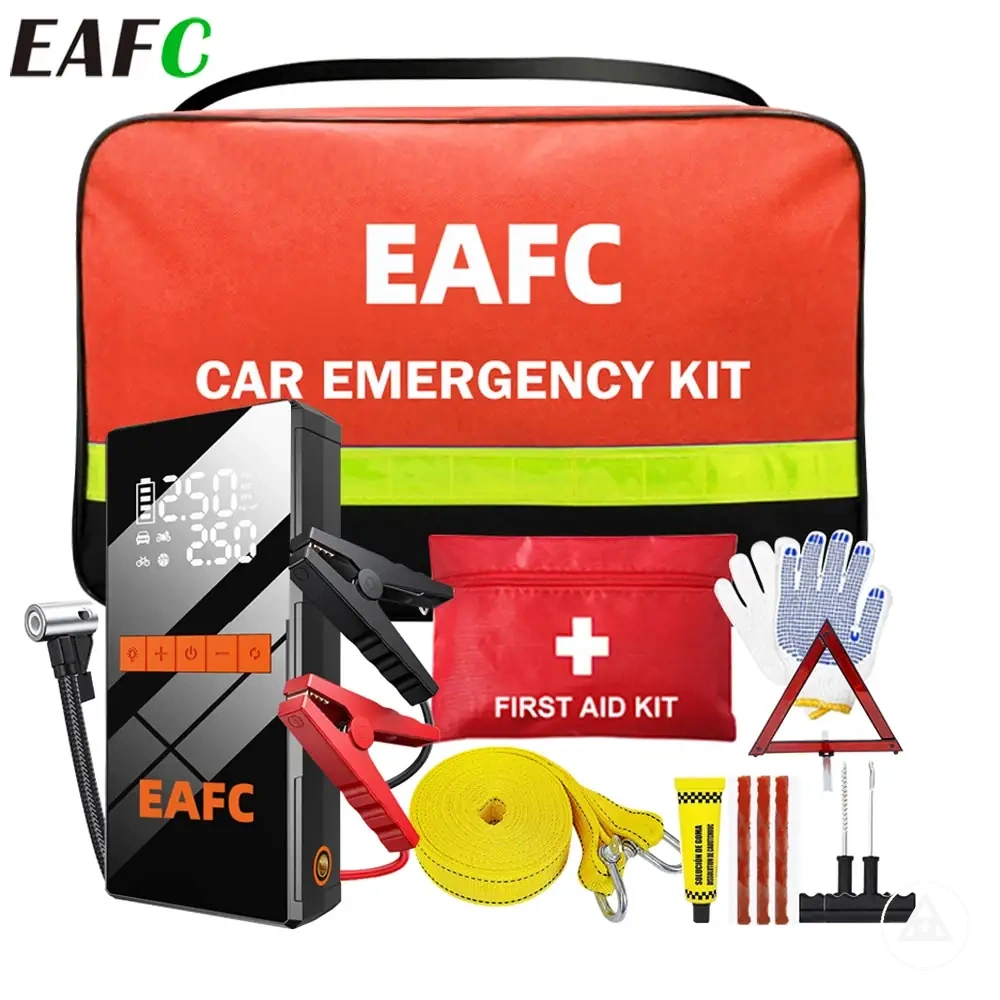
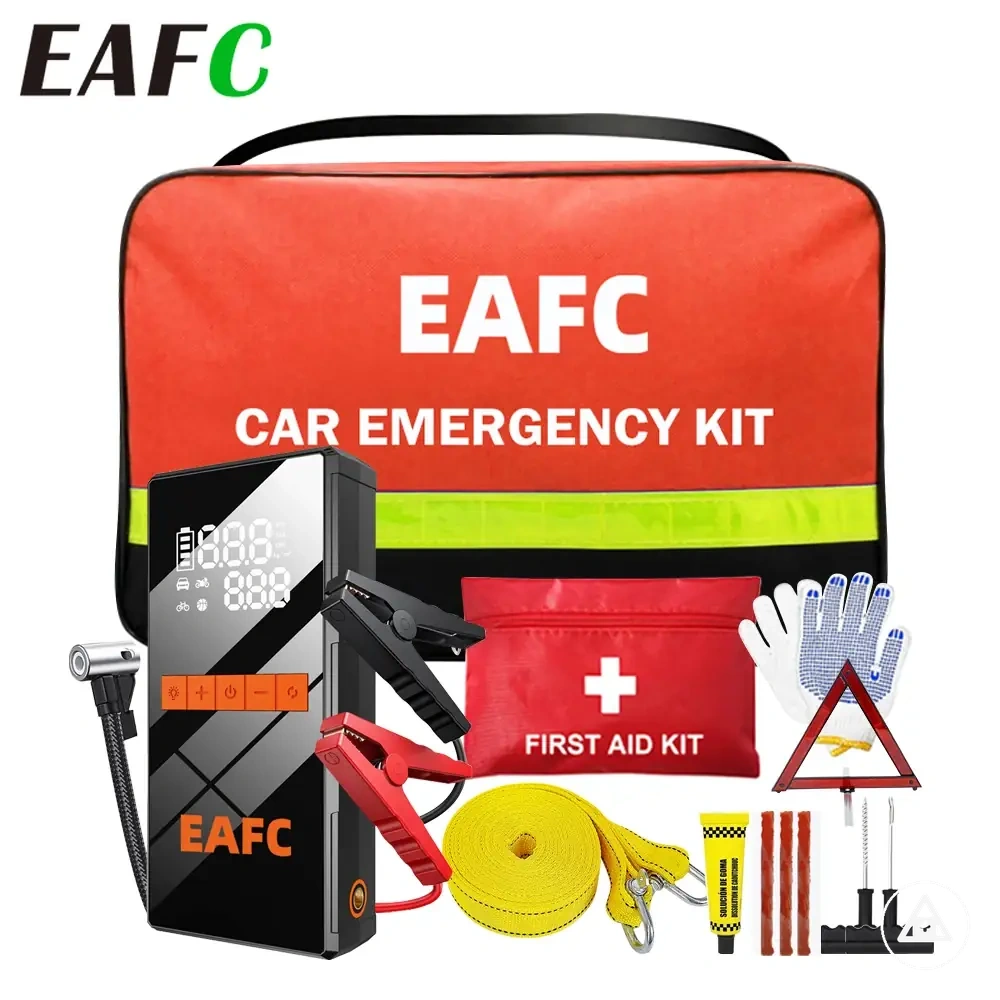
Here are product examples that may make comparison easier. Before buying, always review the compatibility criteria, essential features, and product details.
When a pre-made kit makes more sense
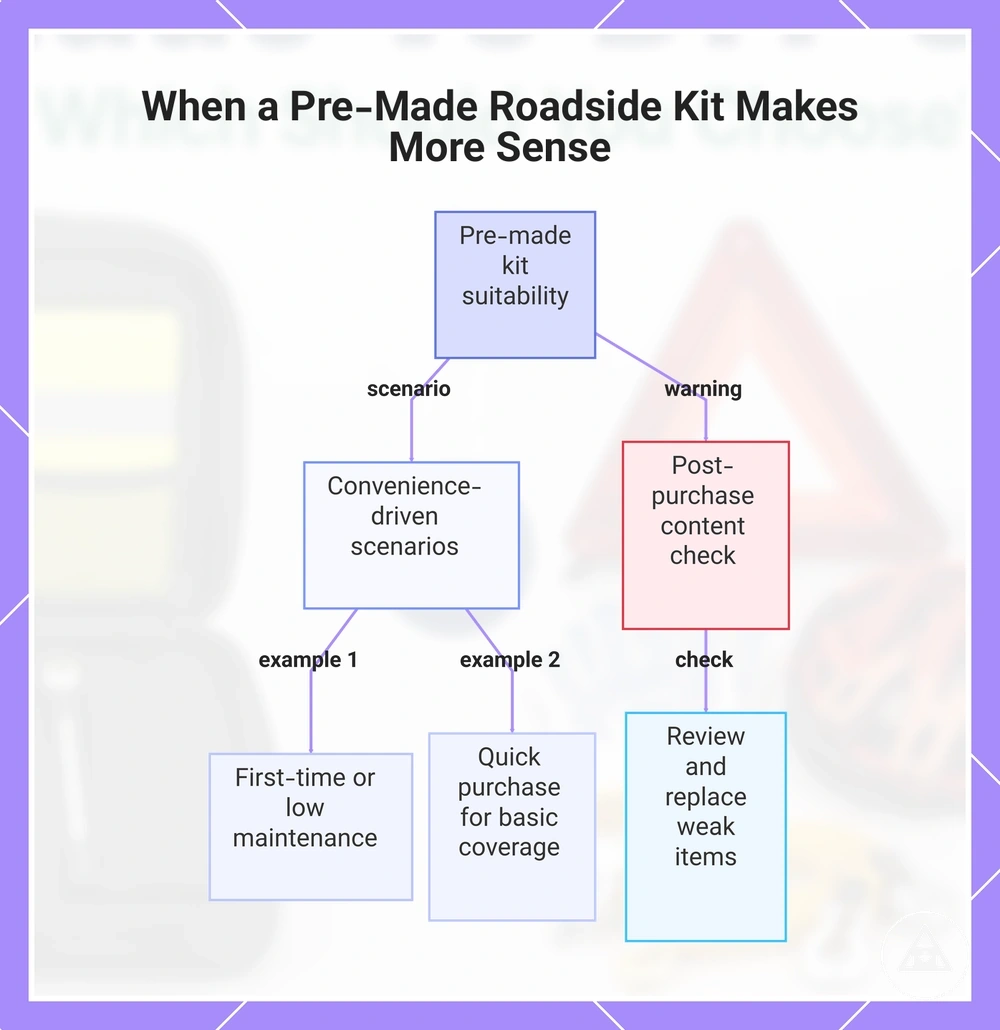
A pre-made kit makes more sense when readiness and reduced setup effort matter more than customization. A ready bundle can help when the driver wants basic roadside coverage without selecting each item separately. The main decision signal is convenience.
For first-time preparedness or low maintenance needs, a pre-assembled kit can provide a practical starting point. It may also suit a quick purchase situation where the driver wants emergency supplies grouped before refining the kit later. The contents should still be checked because weak items, missing supplies, or unsuitable components may need replacement or supplementation.
- First-time preparedness: A pre-made kit fits when the driver wants a starting bundle instead of building from zero.
- Low maintenance: A ready-made kit fits when reduced setup effort matters more than detailed item selection.
- Quick purchase: A ready roadside bundle can be practical when the driver needs basic supplies grouped quickly.
- Basic roadside coverage: A pre-made kit may fit when the goal is general readiness rather than tailored coverage.
This chart shows the convenience-driven scenarios where a pre-assembled kit is practical and the essential post-purchase check for weak or missing items.
When a DIY kit makes more sense
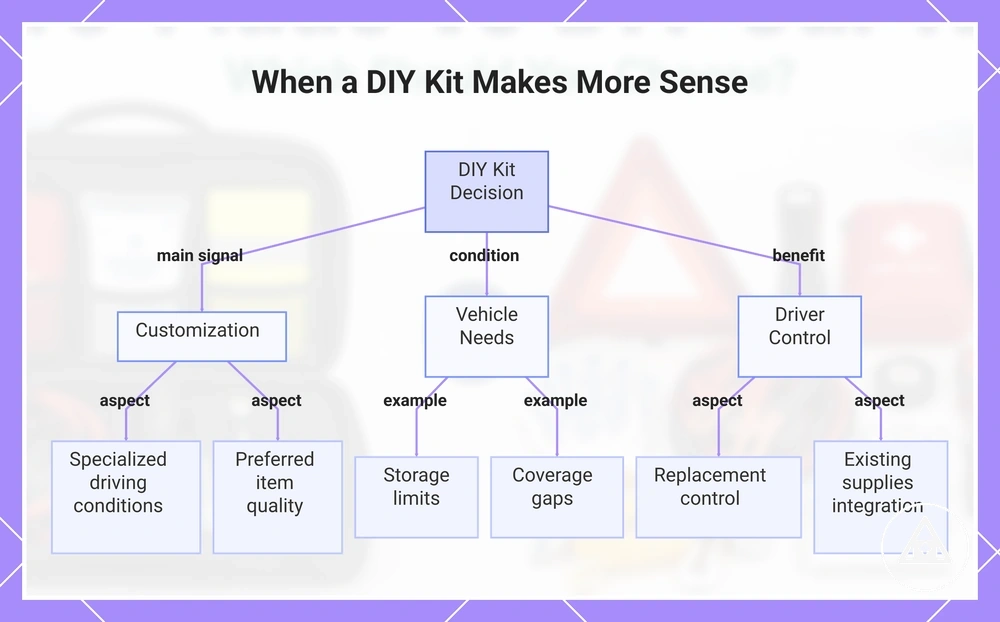
A DIY kit makes more sense when customization, replacement control, and specific vehicle needs matter more than reduced setup effort. Building a kit allows the driver to choose supplies based on condition, coverage priorities, and intended use. The main decision signal is customization.
For specialized driving conditions or preferred item quality requirements, a DIY kit can provide a closer fit than a fixed bundle. It may also suit drivers who already have existing supplies and want to build around them rather than replace them. The tradeoff is that checking, organization, and upkeep remain the driver's responsibility.
- Specific vehicle needs: A DIY kit may fit when storage limits, equipment priorities, or coverage gaps require a more tailored setup.
- Preferred item quality: Building a kit allows greater control over the condition and selection of individual supplies.
- Existing supplies: A custom kit can make sense when useful emergency items are already available and can be organized into one system.
- Specialized driving conditions: A build-your-own kit may provide a better fit when driving environments create unique preparedness requirements.
- Replacement control: A homemade kit can suit drivers who want direct control over upgrades, replacements, and ongoing maintenance decisions.
This chart shows the key factors that indicate a DIY kit is a better choice than a fixed bundle, including customization, vehicle needs, and driver control.
When a hybrid kit is the safer choice
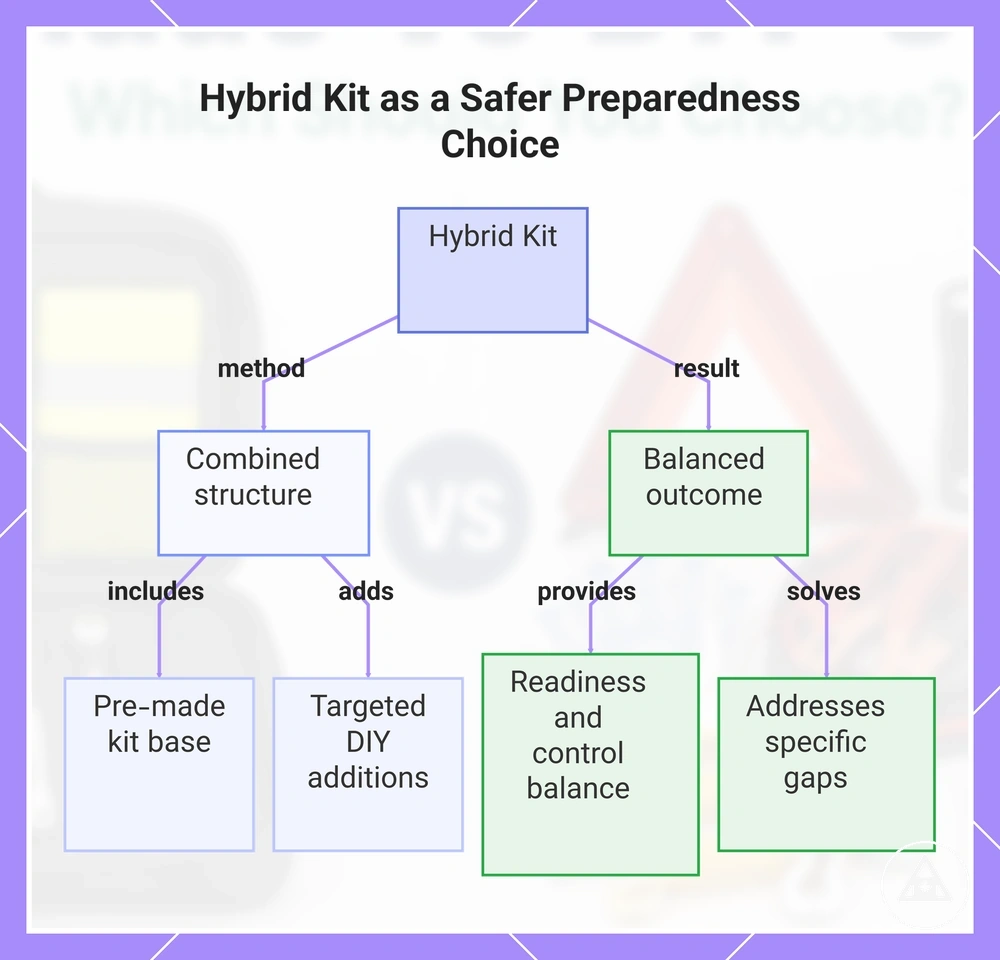
A hybrid kit is often the safer choice when a pre-made kit provides useful readiness but does not fully match the driver's needs. By combining a base bundle with selected DIY upgrades, a hybrid kit can address specific gaps without requiring a complete rebuild. The result is a balance between readiness and control.
A hybrid kit starts with a pre-made kit and adds targeted supplies where the base bundle may be limited. This mixed approach can improve organizer fit, storage access, replacement items, or coverage priorities without replacing every included component. Added supplies are chosen to address specific conditions rather than create a separate kit category. The value of the approach depends on how well the upgrades address driving-specific gaps.
The following add-on categories help organize common upgrade decisions:
- Missing safety item: Add a safety-related item when the base bundle lacks needed coverage.
- Better lighting: Upgrade lighting if visibility needs are not fully addressed.
- First aid refill: Replace or supplement depleted or limited first aid contents.
- Organizer improvement: Adjust storage or organizer fit to improve access and item grouping.
- Seasonal or driving-specific gap: Add supplies that reflect local conditions or driving patterns.
- Battery replacement: Replace weak or aging batteries to support readiness.
A hybrid approach can be useful when a pre-made kit is convenient but incomplete for the driver's situation, and targeted DIY upgrades provide a more balanced result.
This chart shows how a hybrid kit combines a pre-made bundle with DIY upgrades to achieve a balance between readiness and control, addressing specific gaps without a full rebuild.