Roadside Safety Items for a Car Emergency Kit
Roadside safety items are the part of a car emergency kit that help with visibility, warning, protection, fast access, and readiness during a breakdown. Their safety purpose is to help the driver and stopped vehicle become easier to notice while reducing avoidable traffic exposure.
A roadside breakdown can create risk before any repair or assistance begins, especially when traffic, low visibility, weather, or a narrow shoulder changes the situation. Warning gear, emergency lighting, personal protection, escape tools, reachable storage, and condition checks each support a different safety need without turning the kit into a full repair system.
In low visibility, a warning triangle, high-visibility vest, emergency flashlight, or roadside warning light can help signal the situation when it is safe and suitable to use them. Placement, local expectations, road type, and whether it is safe to exit the vehicle can vary, so safety items should support judgement rather than replace it.
Roadside safety items are not the same as every item inside a car emergency kit. They focus on visibility, traffic awareness, personal protection, emergency access, and readiness, which sets up the first grounding question: what actually counts as a roadside safety item?
What Counts as a Roadside Safety Item in a Car Emergency Kit
A roadside safety item is equipment that helps protect people around a stopped vehicle rather than repair the vehicle itself. Its primary role is to support visibility, warning, lighting, personal protection, or emergency access around traffic.
A roadside safety item helps protect people by making a stopped vehicle easier to notice, improving awareness for approaching traffic, or supporting safer access around the vehicle when conditions allow. Examples may include reflective gear, warning devices, lighting equipment, and emergency access tools, without implying that every car emergency kit needs the same set of safety equipment.
What Counts as a Roadside Safety Item in a Car Emergency Kit is determined by the item's protection role rather than whether it appears in a broader collection of kit contents. Safety items can overlap with general emergency supplies, but they differ from repair tools or comfort items because their main purpose is safety support; for broader kit context, see the car emergency kit overview.
What Counts as a Roadside Safety Item in a Car Emergency Kit becomes easier to identify when the main safety categories are grouped together. The image below labels common roadside safety gear that supports visibility, warning, lighting, and emergency access.
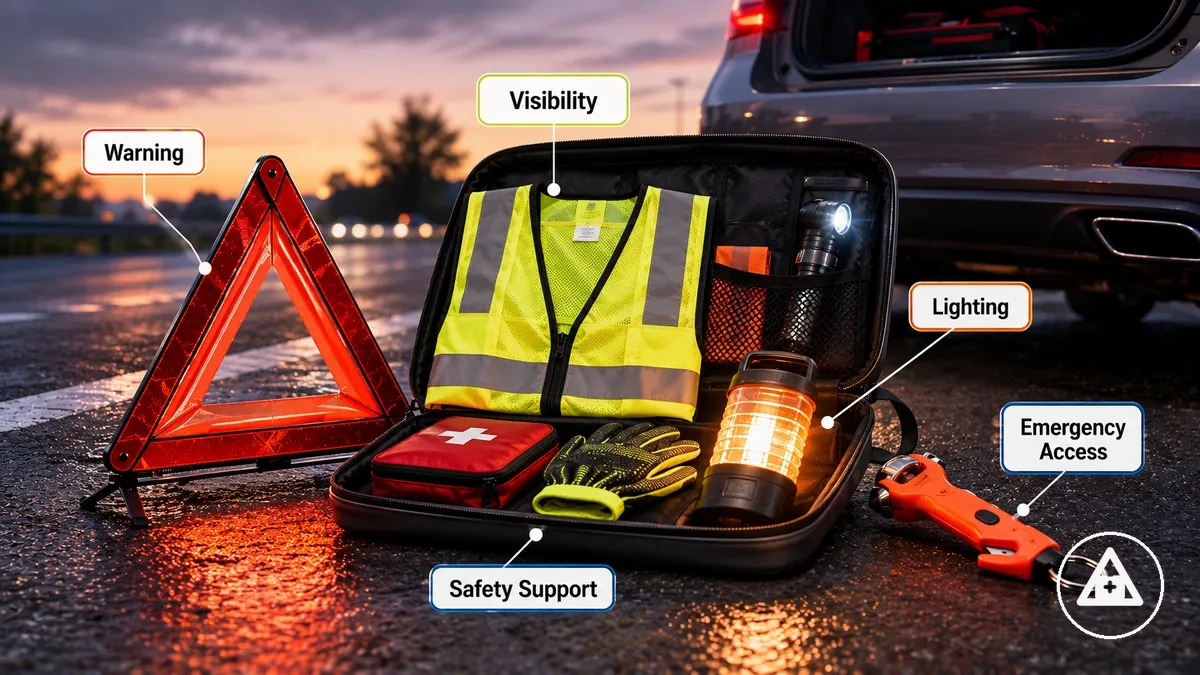
- Warning triangle or similar warning equipment
- High-visibility vest or reflective roadside safety gear
- Emergency flashlight or roadside warning light
- Emergency access tool intended for urgent situations
- Vehicle safety supplies that support visibility or warning around a stopped vehicle
Safety Items That Protect Visibility Around a Stopped Vehicle
Visibility items help approaching drivers notice a stopped vehicle and the person outside it earlier. Safety Items That Protect Visibility Around a Stopped Vehicle improve visibility through reflectivity, warning signals, and visual contrast, helping make roadside situations easier to notice.
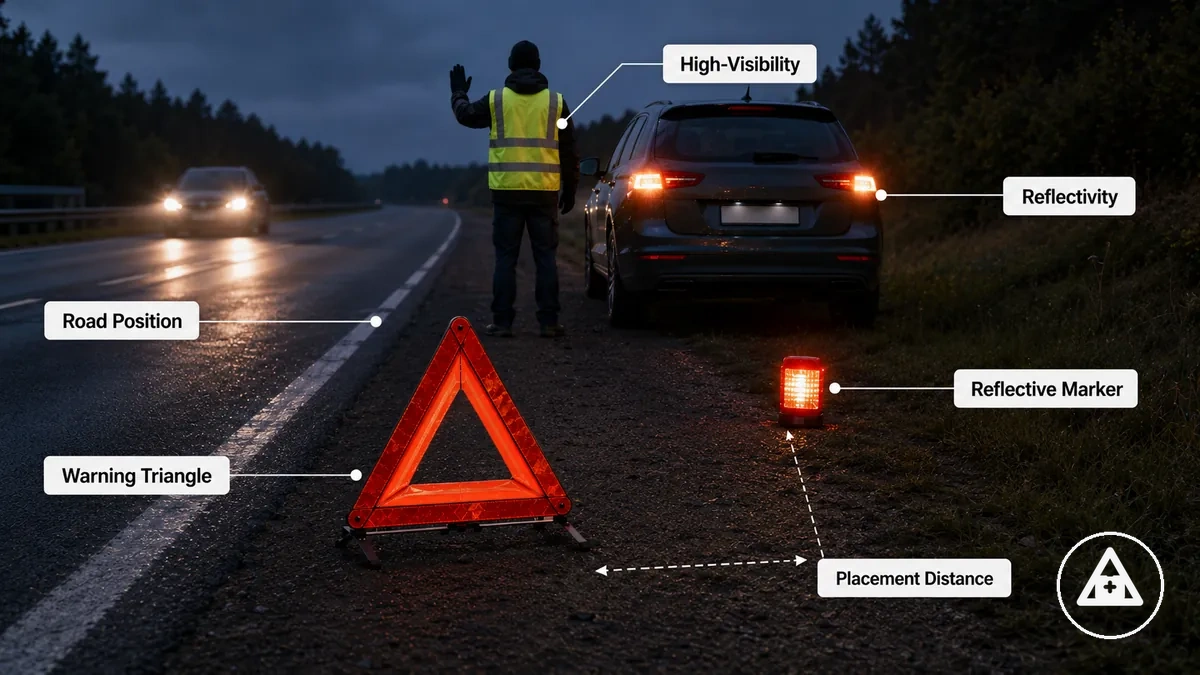
Visibility protection depends on placement distance, reflectivity, daylight conditions, weather, and road position. A warning triangle, reflective marker, or high-visibility clothing provides visual cues that can help approaching drivers recognize a stopped vehicle or person outside the vehicle sooner. How noticeable these items are may vary with traffic speed, shoulder conditions, surrounding light, and visibility distance, making placement distance and reflectivity important criteria.
| Item or gear | Visibility attribute | Use condition | Safety effect |
|---|---|---|---|
| Warning triangle | Reflective warning surface | Stopped vehicle near approaching traffic | Helps signal a vehicle ahead |
| Reflective marker | Light reflection | Low light, rain, or reduced visibility | Helps approaching drivers notice a roadside hazard area |
| High-visibility clothing | Bright and reflective appearance | Person outside vehicle near traffic | Improves visibility of the individual |
| Roadside warning gear | Visual contrast and signaling | Changing daylight or weather conditions | May improve awareness of a stopped vehicle location |
In daylight, visibility items often rely on contrast and road position to remain noticeable. At night, during rain, or on a high-speed road, a warning triangle, reflective marker, and high-visibility clothing may provide stronger visual signals when visibility becomes more limited. Placement distance depends on local requirements, traffic conditions, shoulder width, and whether the roadside context allows safe placement.
Item visibility, person visibility, and placement context each influence how visibility items perform around a stopped vehicle. Easy storage access and regular condition checks help keep reflective warning items ready for use when needed. These criteria provide context for the detailed visibility-item discussions that follow.
Warning Triangles and Reflective Markers
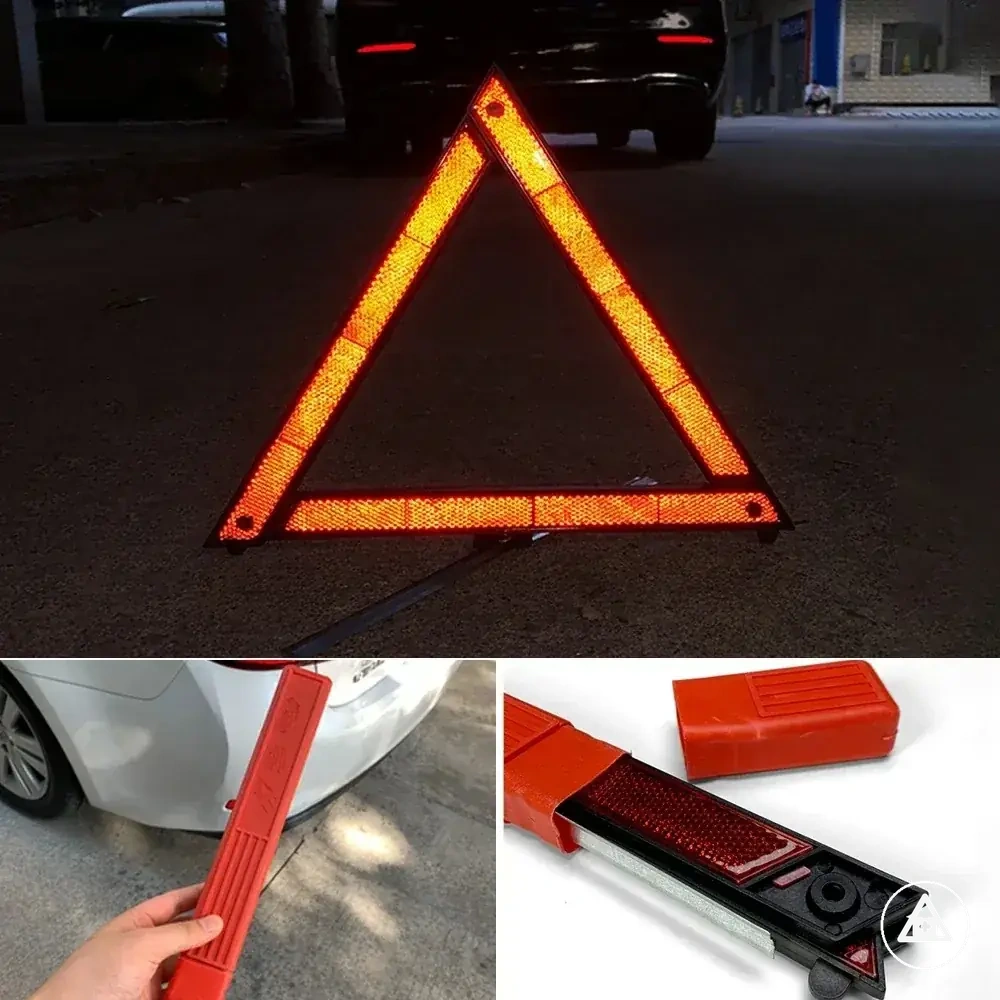
A warning triangle and reflective marker are roadside warning devices that use reflective surfaces to make a stopped vehicle easier to notice. Warning Triangles and Reflective Markers support the broader visibility goal by providing a visible reference point, especially in low light, serving a clear warning role.
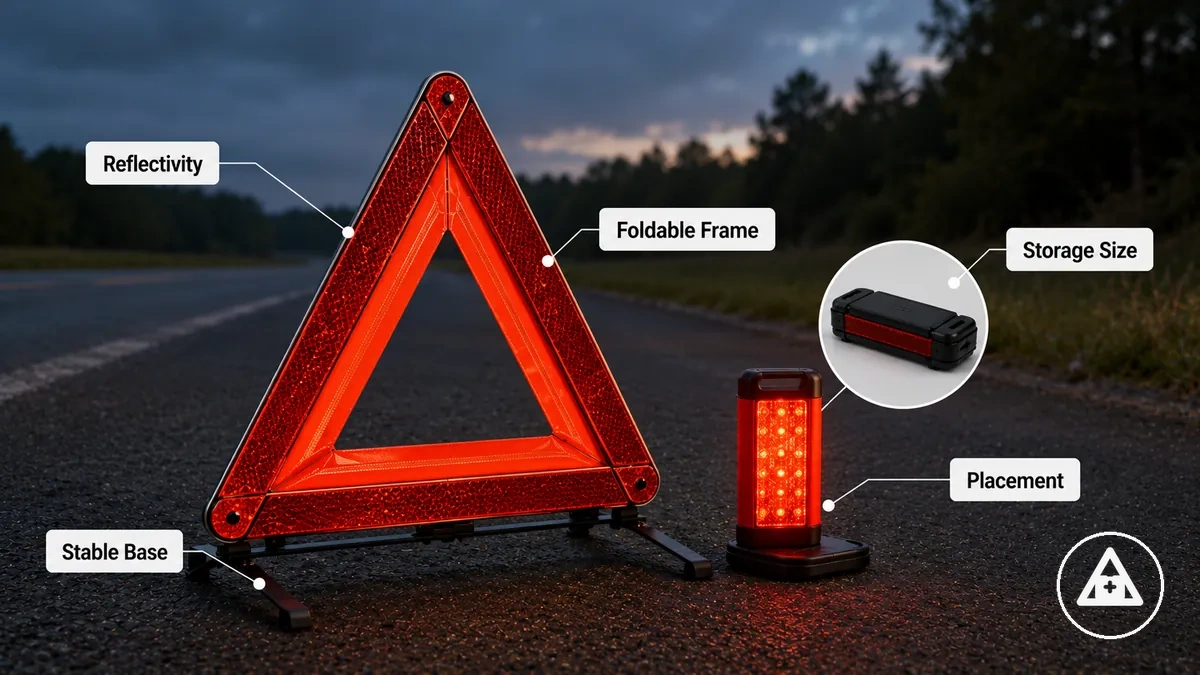
- Reflectivity: A warning triangle or reflective marker uses a reflective surface that reflects light and helps improve visibility in low-light conditions.
- Stability: The base supports stability and helps the marker stand upright, although wind and road shoulder conditions may affect performance.
- Foldability: A foldable reflective triangle can reduce storage size and fit more easily inside a kit bag.
- Storage access: A compact roadside marker is typically easier to store and retrieve when visibility support is needed.
- Placement: The effectiveness of a reflective marker depends on placement, surrounding conditions, and whether the marker remains visible. Regular condition checks can help identify reduced reflectivity or stability.
Visibility quality depends mainly on reflectivity, while physical reliability depends on base stability and folding design. A warning triangle or reflective marker may provide less benefit if the reflective surface is damaged or if the marker cannot remain upright. Placement and performance depend on low-light conditions, road position, and routine condition checks.
High-Visibility Vests and Wearable Reflective Gear
A high-visibility vest and reflective gear improve the visibility of the person outside the vehicle rather than the vehicle itself. Reflective strips help the wearer remain easier to notice in traffic conditions, and the vest protects the person’s visibility.
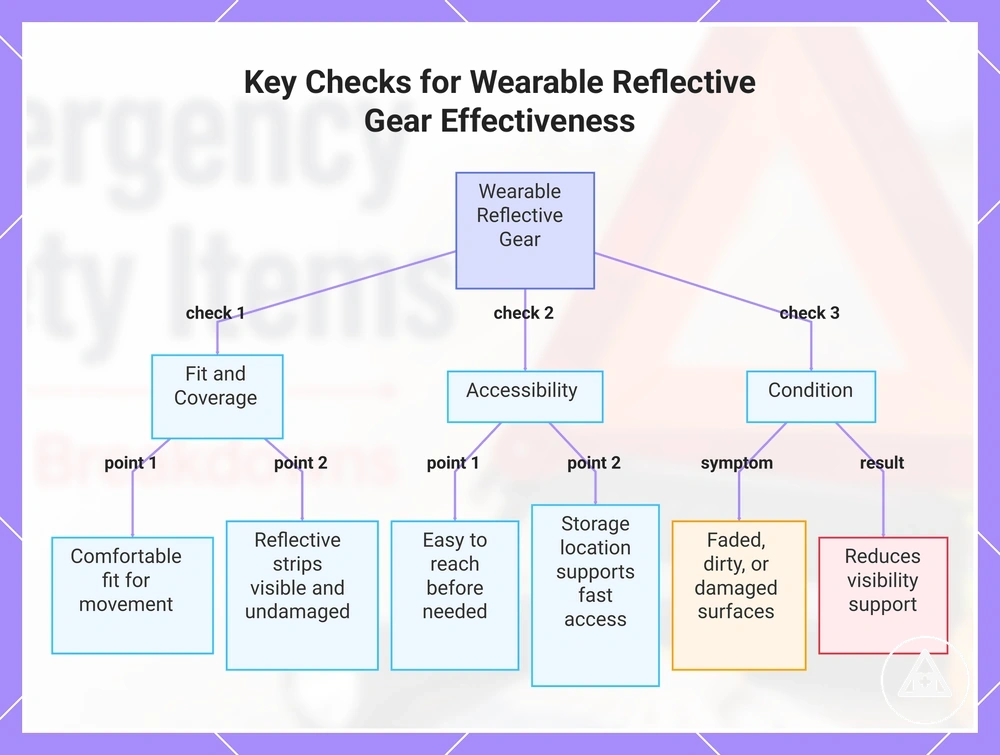
Before relying on wearable visibility, it helps to verify a few practical criteria:
- Fit: The high-visibility vest should fit comfortably enough to support movement.
- Reflective coverage: Reflective strips should remain visible and free from significant wear or damage.
- Reachability: The vest should remain easy to reach before it is needed.
- Condition: Reflective gear may provide less visibility support if reflective surfaces become faded, dirty, or damaged.
- Storage: A storage location that supports fast access can make the vest easier to retrieve before leaving the vehicle.
Vest colour, reflective strip placement, and fit can influence wearable visibility, while reachability affects how quickly the gear can be used. A high-visibility vest supports movement visibility around traffic, but it does not replace safe positioning away from traffic or other warning devices. Wearable reflective gear is most useful when it remains accessible before exiting the vehicle.
This chart shows the main criteria to verify when using high-visibility vests and reflective gear to ensure personal visibility around traffic.
Placement and Rule Differences for Roadside Warning Items
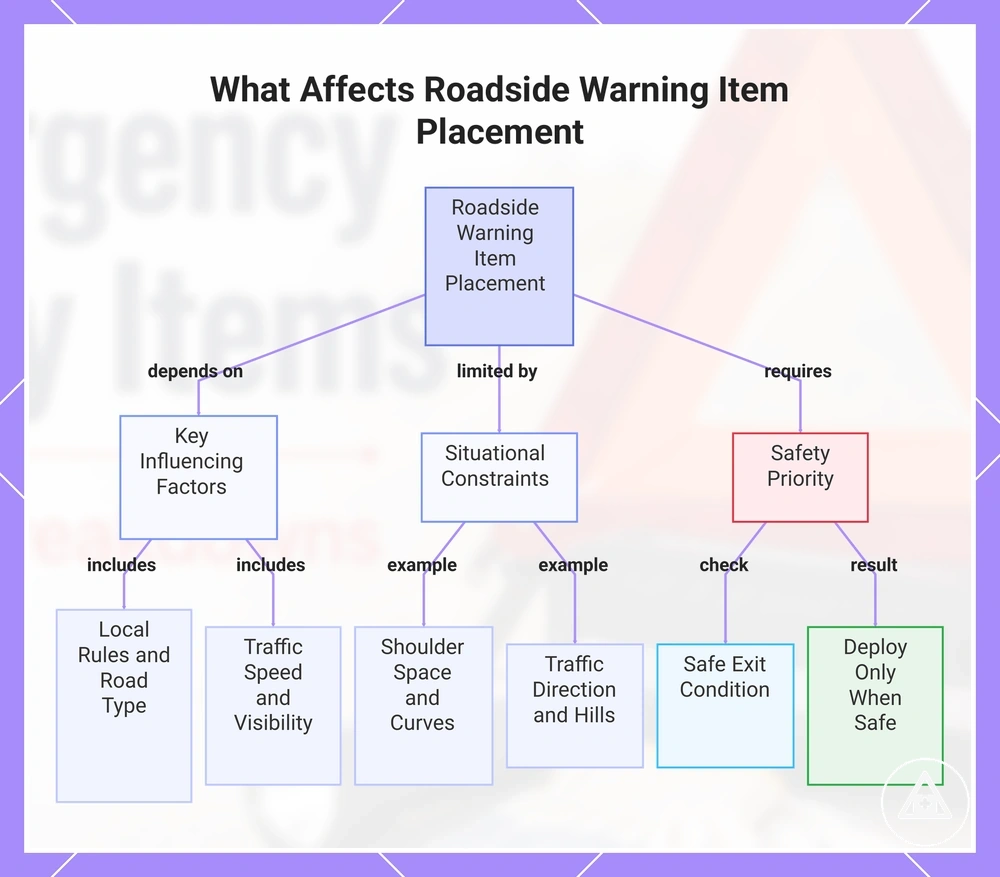
Placement of a warning item near a stopped vehicle depends on local rules, road type, traffic speed, visibility, and whether it is safe to exit the vehicle. The appropriate positioning can vary by situation, which means placement depends on context.
Caution: Placement rules and roadside conditions vary, and leaving the vehicle may not be the safest option in every situation.
Roadside placement may be influenced by the direction of approaching traffic, available shoulder space, visibility around curves or hills, and how easily a warning item can be seen. Distance considerations can vary with local rules, road type, traffic speed, and visibility conditions, so general information does not replace local requirements. When shoulder limits, curves, hills, or traffic conditions reduce visibility, placement options may be more restricted. Personal safety should remain the priority, and a warning item should only be deployed when it is safe to exit the vehicle.
This chart shows the key factors influencing roadside warning item placement and the safety priority that must guide deployment.
Emergency Lighting Items for Night and Low-Visibility Breakdowns
Emergency lighting helps a driver see, be seen, and signal a roadside situation when darkness, rain, or limited visibility make a stopped vehicle harder to manage. A flashlight, headlamp, roadside warning light, or safety beacon can support inspection, signalling, and safer movement around a vehicle, which is the primary safety function of emergency lighting.
| Item type | Main function | Condition where it helps | Limitation |
|---|---|---|---|
| Flashlight | Illumination | Inspection, locating items, checking around the vehicle | Usually occupies one hand during use |
| Headlamp | Illumination | Movement or inspection tasks that benefit from hands-free lighting | Battery condition can affect usefulness |
| Roadside warning light | Signalling | Darkness, rain, or poor shoulder lighting | Visibility can depend on placement and battery condition |
| Safety beacon | Signalling | Situations where signalling a stopped vehicle is important | Does not replace other warning measures |
Emergency lighting needs can change with darkness, weather conditions, and battery availability. A flashlight illuminates nearby areas and helps inspect the vehicle, while a roadside warning light or safety beacon focuses on signalling and visibility. Brightness, battery type, battery condition, and weather resistance may influence how useful an emergency light remains during a breakdown, especially in rain or poor shoulder lighting.
A flashlight uses a beam to illuminate specific areas during inspection tasks, while a headlamp supports movement and repair checks without occupying the hands. When hands-free use is safer or more practical, a headlamp can help maintain visibility while carrying equipment or moving around obstacles. Roadside warning lights and safety beacons focus on signalling rather than inspection, which distinguishes them from illumination tools and supports hands-free use.
Rain, a dead battery, or poor shoulder lighting can limit how effective emergency lighting remains during a breakdown. Brightness adequacy, weather resistance, and battery performance depend on the condition of the light and the surrounding environment. Runtime and lighting performance can vary by battery condition and use, so it is best to avoid assuming a specific runtime outcome.
Flashlights, Headlamps, and Backup Batteries
A flashlight, headlamp, and backup batteries support roadside inspection and movement by providing portable light when visibility is limited. A flashlight illuminates specific areas, while a headlamp provides hands-free lighting that can support inspection and movement use without reducing awareness of the surrounding roadside environment.
Key lighting attributes that can affect safe use include:
- Brightness: Brightness influences how well a flashlight or headlamp illuminates nearby areas, although suitability may depend on roadside conditions and visibility needs.
- Beam type: A focused beam can support inspection tasks, while a broader beam may improve awareness of the surrounding roadside area.
- Battery format: Rechargeable or replaceable battery formats power the light, and backup batteries can help if a dead battery limits use.
- Water resistance: Water resistance may support usability in rain or damp conditions, although effectiveness can vary with item condition and exposure.
- Storage readiness: Easy access to a flashlight, headlamp, and spare batteries can reduce delays when light is needed during a roadside check.
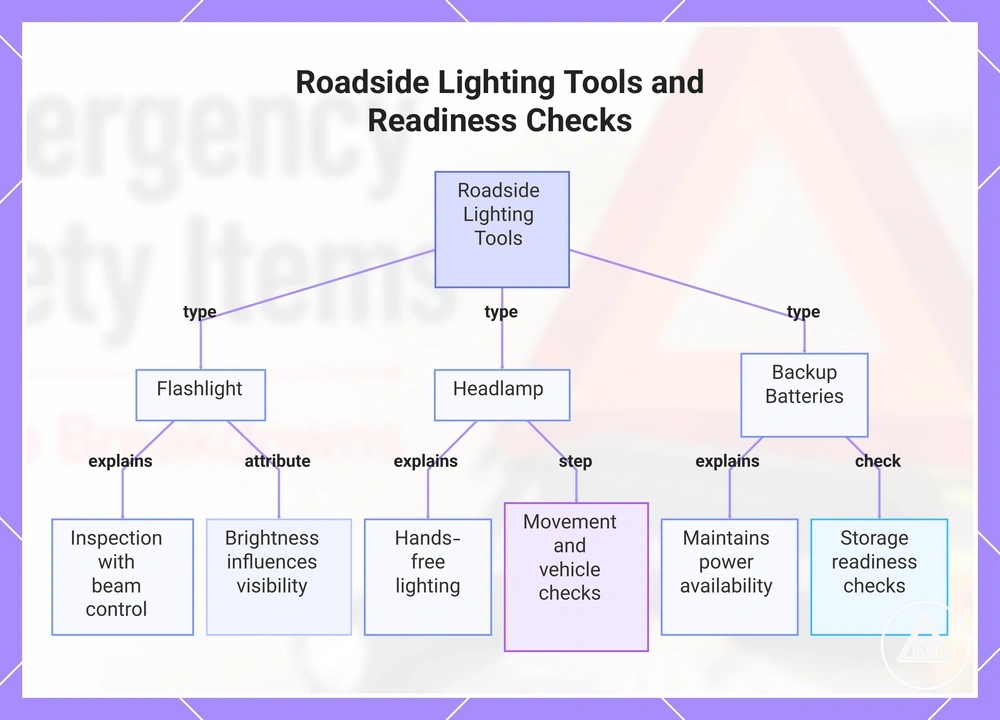
A flashlight supports inspection through beam control, while a headlamp frees hands for movement or vehicle checks. Backup batteries support storage readiness by helping maintain power availability when battery condition changes. Regular checks of storage readiness and battery condition can support readiness when lighting is needed.
This chart shows the main functions of flashlights, headlamps, and backup batteries, along with key readiness checks for roadside safety.
Roadside Warning Lights and Safety Beacons
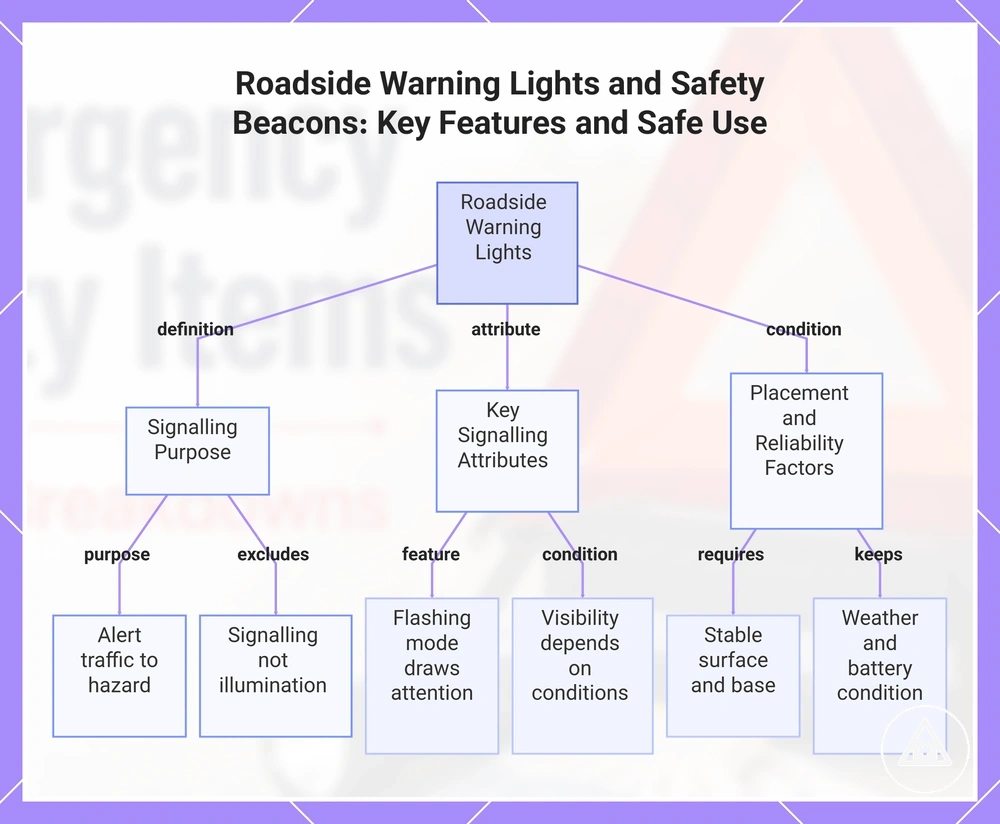
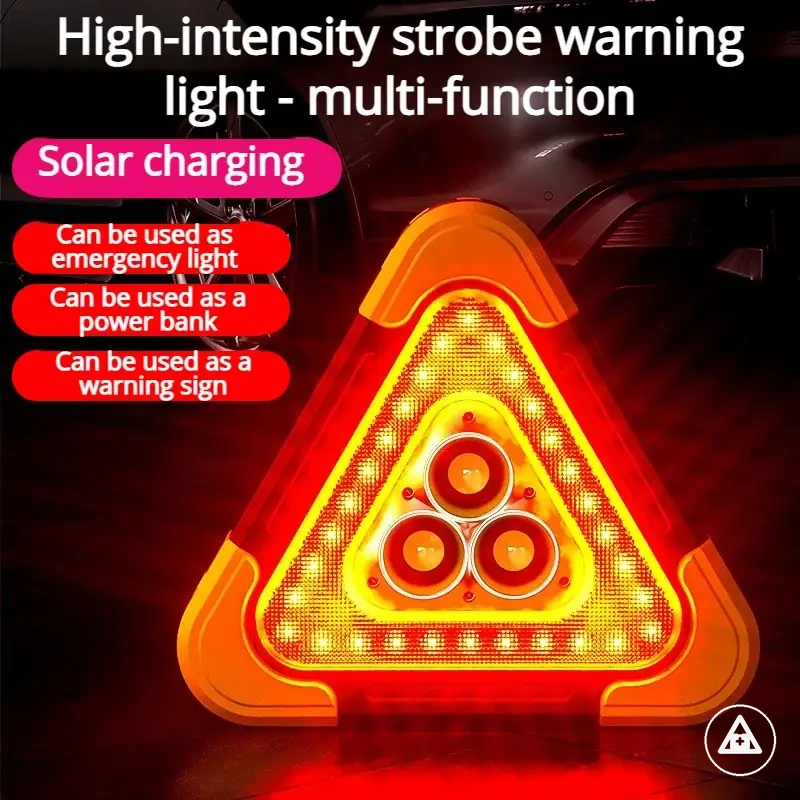
A roadside warning light and safety beacon are signalling devices that help alert approaching traffic to a roadside hazard. Unlike a flashlight or headlamp that illuminates a work area, a roadside warning light or safety beacon focuses on signalling rather than illumination.
Key signalling attributes that can affect safe use include:
- Flashing mode: A flashing mode can help draw attention to a roadside hazard, although visibility outcomes may depend on traffic, weather, and surrounding conditions.
- Placement surface: The placement surface can affect stability and whether the roadside warning light remains visible from the direction of approaching traffic.
- Magnetic base or standing base: A magnetic base may mount to a vehicle body, while a standing base can support placement on a stable roadside surface.
- Weather resistance: Weather resistance may help a safety beacon remain usable in rain or damp conditions, although performance can vary with exposure and item condition.
- Battery condition: Battery condition affects whether the warning light or safety beacon can continue providing a safety signal when needed.
A roadside warning light or safety beacon is most useful when it can be positioned where approaching traffic may notice the signal without creating additional risk during placement. Stability depends on the placement surface, base type, and surrounding conditions. Safe positioning and reliable signalling also depend on battery condition and whether the device remains ready for use when needed.
This chart explains what roadside warning lights and safety beacons are, their key signalling attributes, and the placement and reliability factors that affect safe use.
Personal Protection Items for Staying Safe Near Traffic
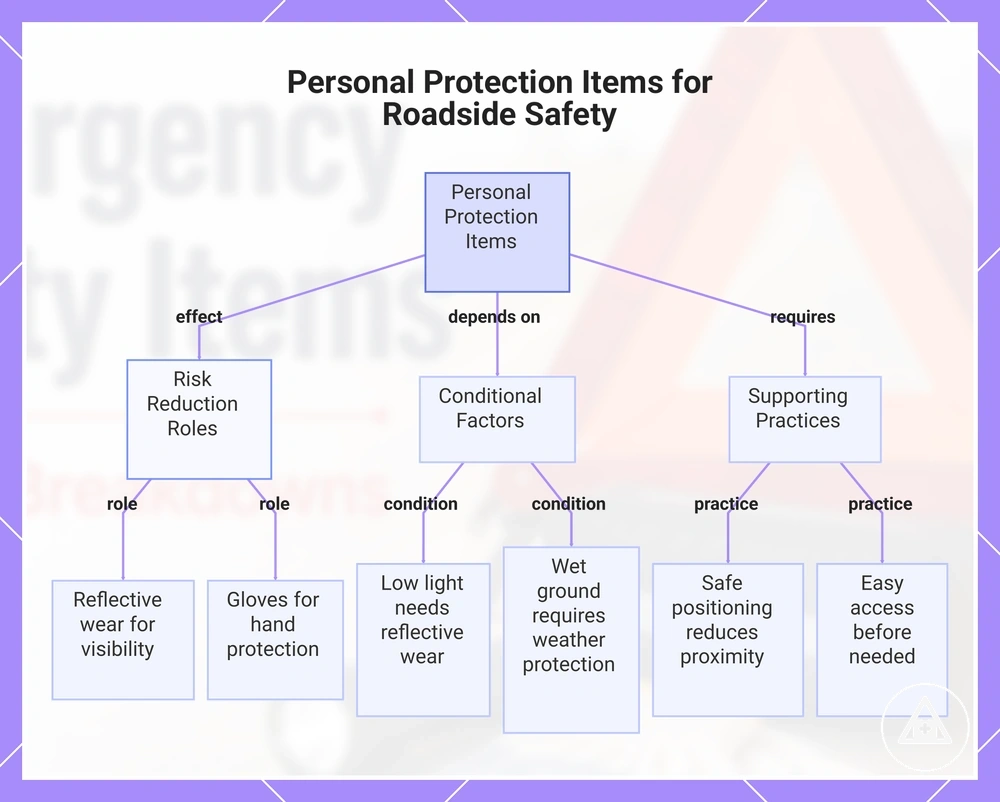
Personal protection items help reduce traffic exposure, limit hand-contact risk, manage weather-related stress, and support safer movement during a roadside breakdown. Gloves, reflective wear, weather protection, and simple personal safety gear help a person remain visible and reduce contact with hazards, supporting risk reduction.
- Reflective wear: Helps improve person visibility in low light and may reduce traffic exposure when outside a stopped vehicle.
- Gloves: Help limit contact with sharp edges, rough surfaces, or debris during a roadside task and can reduce hand injury risk.
- Weather protection: May help reduce exposure to rain, heat, or a wet roadside when conditions increase discomfort or distraction.
- Safe positioning: Helps maintain a position that reduces unnecessary proximity to moving traffic and roadside hazards.
- Access: Personal protection items are most useful when they remain easy to reach before they are needed.
Personal protection items reduce different risks depending on the condition involved. Reflective wear supports person visibility when traffic exposure increases, gloves help protect hands during roadside tasks that involve contact with vehicle surfaces, and weather protection may help when rain, heat, or wet ground affects comfort and movement. Simple first-response items can support roadside protection while remaining separate from detailed first aid contents, and their usefulness depends on condition-based use.
Risk can change with shoulder conditions, traffic flow, lighting, and weather. In low light, reflective wear may become more important for visibility, while gloves can help reduce hand-contact risk during checks around a stopped vehicle. Safe positioning remains important regardless of the protective gear used because personal protection items help reduce risk rather than remove it, keeping the focus on roadside safety rather than broader survival planning.
This chart shows the key personal protection items, their hazard-reduction roles, and the conditions and practices that improve their effectiveness during a roadside breakdown.
Escape and Emergency Access Tools
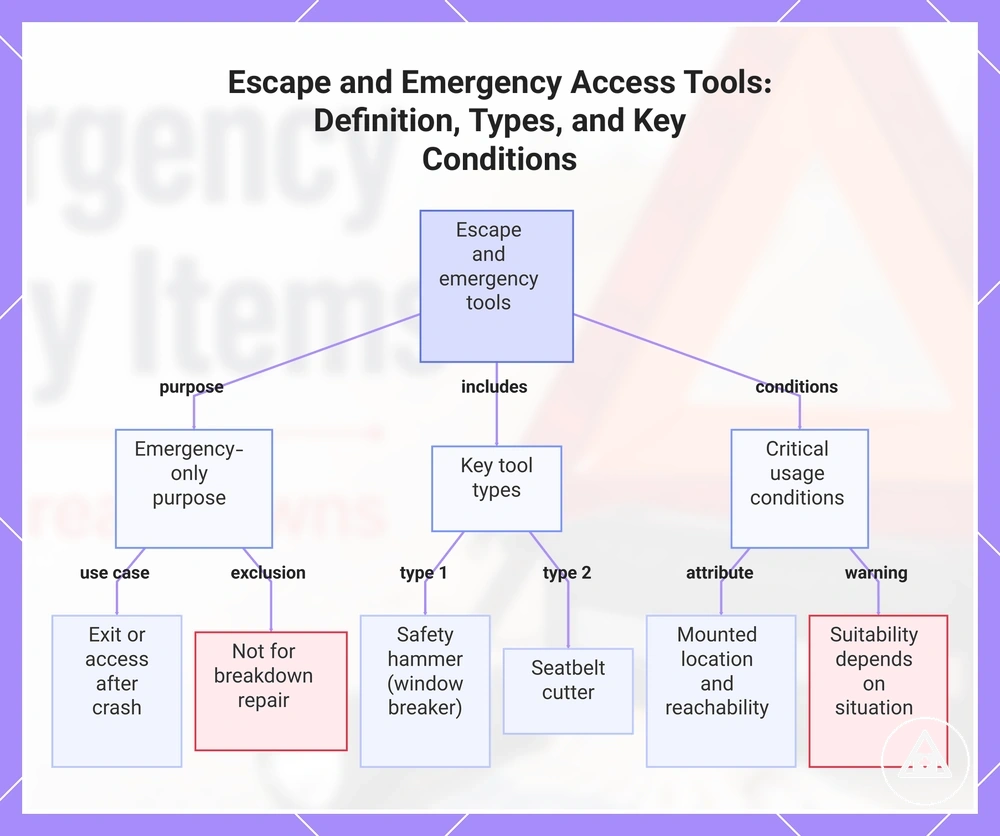
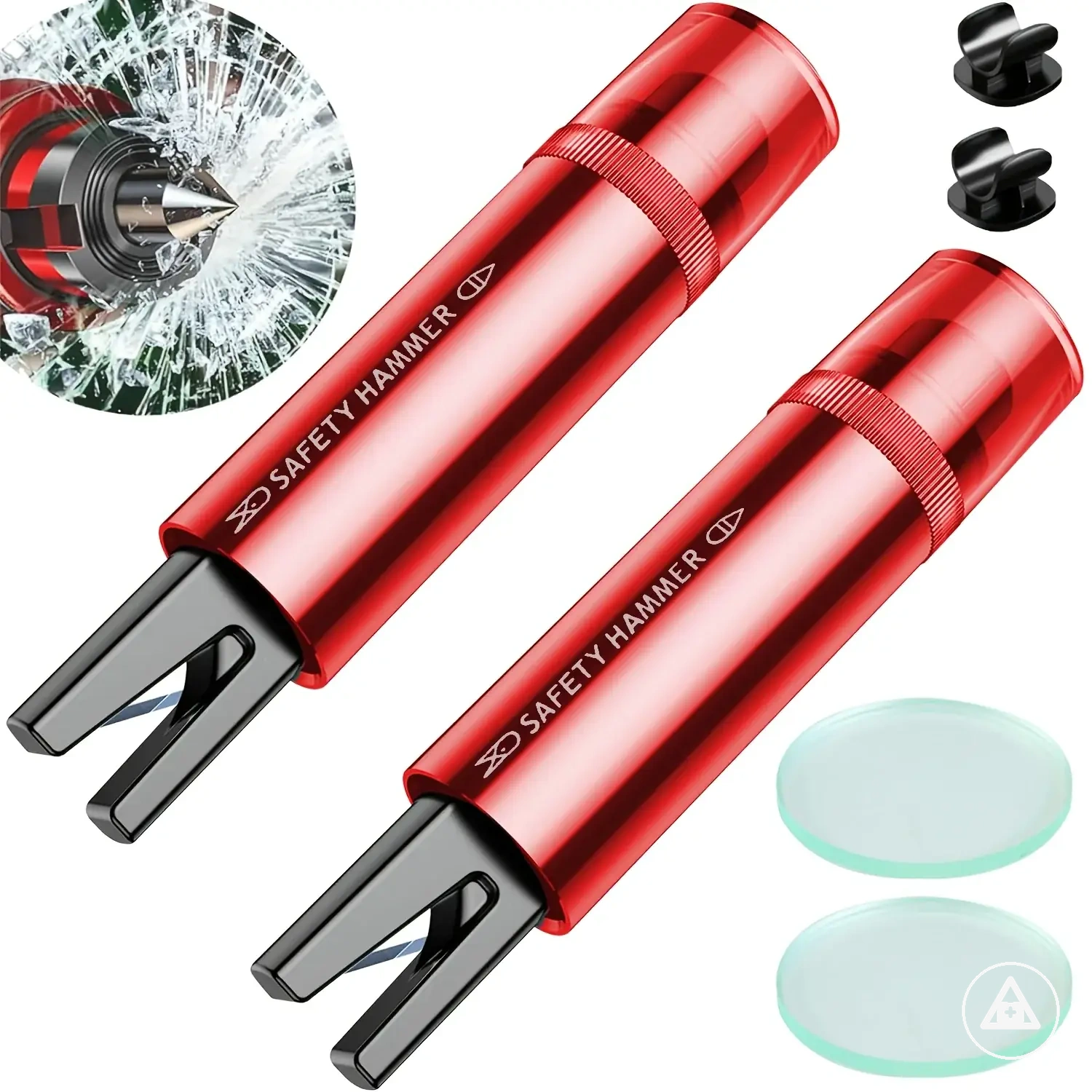
An escape tool supports emergency-only situations where a person may need to exit or gain access more quickly after a crash, lock-in, or unsafe vehicle condition. A safety hammer, seatbelt cutter, or similar emergency access tool is intended for emergency situations and is not part of ordinary breakdown repair.
A safety hammer may include a window breaker function, while a seatbelt cutter is designed to support access when normal movement is restricted. The mounted location is important because reachability from a seated position can affect whether an escape tool is available when needed. A safety hammer or seatbelt cutter should remain easy to access, supporting reachability during an emergency.
Caution: Escape tools support emergency scenarios, but suitability and outcomes depend on the situation and cannot be guaranteed.
An escape tool is intended for crash, lock-in, or unsafe vehicle conditions and should not be confused with tools used for vehicle maintenance or other roadside tasks. These tools support emergency access but do not replace emergency services when professional assistance is needed. This distinction separates escape tools from repair tools.
Tool suitability can depend on the vehicle environment, mounted location, and whether the safety hammer or seatbelt cutter remains reachable from a seated position. An emergency access tool is most useful when it remains accessible while stored securely and used within its intended emergency-only context. For broader usage guidance beyond emergency access scenarios, see using the kit during a roadside problem.
This chart shows what escape and emergency access tools are, their main types, and the critical conditions for their use, including mounting location and situational limitations.
How Roadside Safety Items Differ from General Kit Contents
Roadside safety items differ from general kit contents because their primary purpose is protection rather than repair, comfort, or storage support. The category distinction depends on item purpose and the use condition it is designed to address.
Items in a car emergency kit can belong to different groups even when they are stored together. A safety item focuses on visibility, traffic exposure, or personal protection, while other kit contents support vehicle problems, occupant comfort, care needs, or organization. Item purpose is the main comparison criterion.
| Item group | Primary purpose | Typical condition | Boundary note |
|---|---|---|---|
| Roadside safety items | Protection | Traffic exposure, low visibility, or roadside hazards | Focus on personal visibility, warning, and safety support |
| Repair tools | Repair | Vehicle problem that may require roadside attention | Address vehicle-related issues rather than personal protection |
| First aid supplies | Support | Minor injury or immediate care situation | Support occupant needs rather than traffic visibility |
| Comfort supplies | Comfort | Waiting periods or inconvenient roadside conditions | Reduce discomfort rather than address hazards directly |
| Storage accessories | Organization and support | Keeping kit contents accessible and contained | Store and organize equipment rather than perform a safety function |
Category boundaries can overlap in certain situations. Lighting equipment may support protection through visibility while also helping with access or inspection tasks. For a broader breakdown of grouped equipment and categories, see car emergency kit contents.
When deciding where an item belongs, focus on its primary attribute and likely use condition rather than where it is stored in the kit. Roadside safety items belong in the protection category because they address visibility, traffic exposure, or personal safety concerns, while other kit contents support repair, comfort, or organization needs.
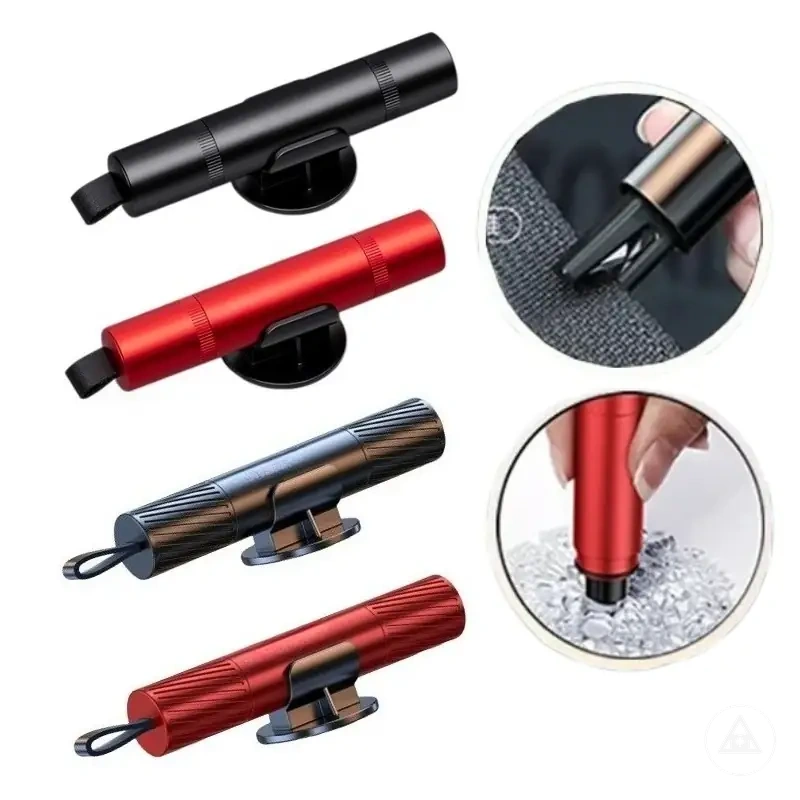
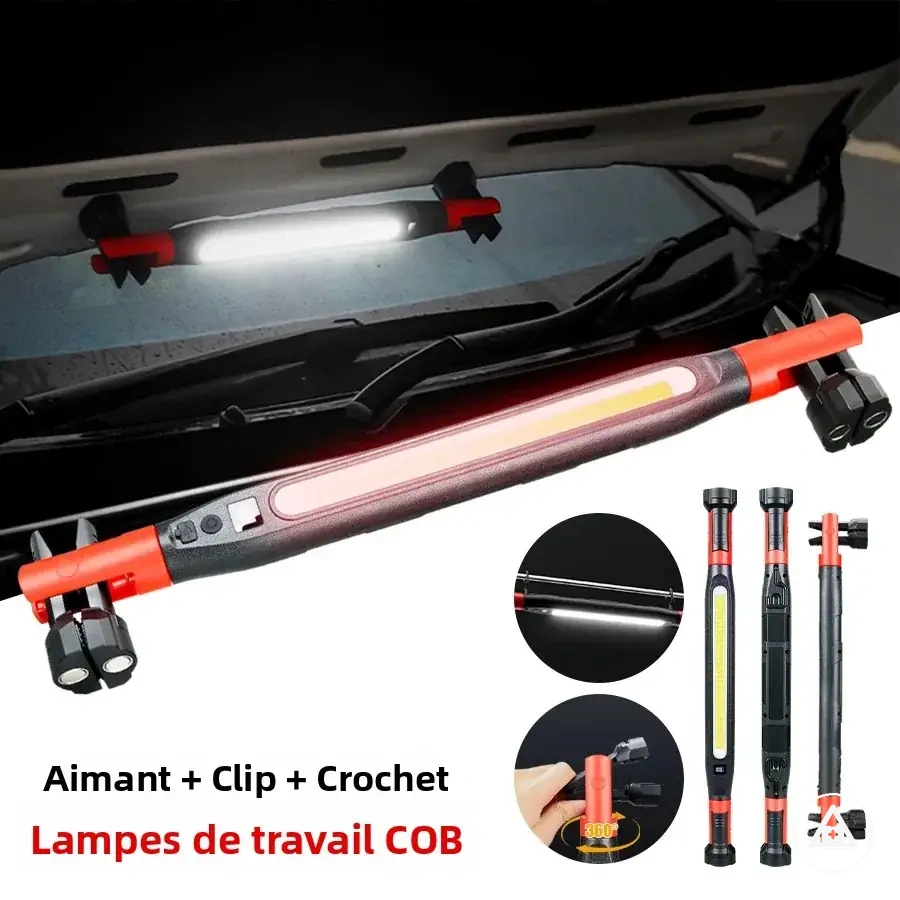
Here are product examples that may make comparison easier. Before buying, always review the compatibility criteria, essential features, and product details.
Safety Item Readiness and Fast Access
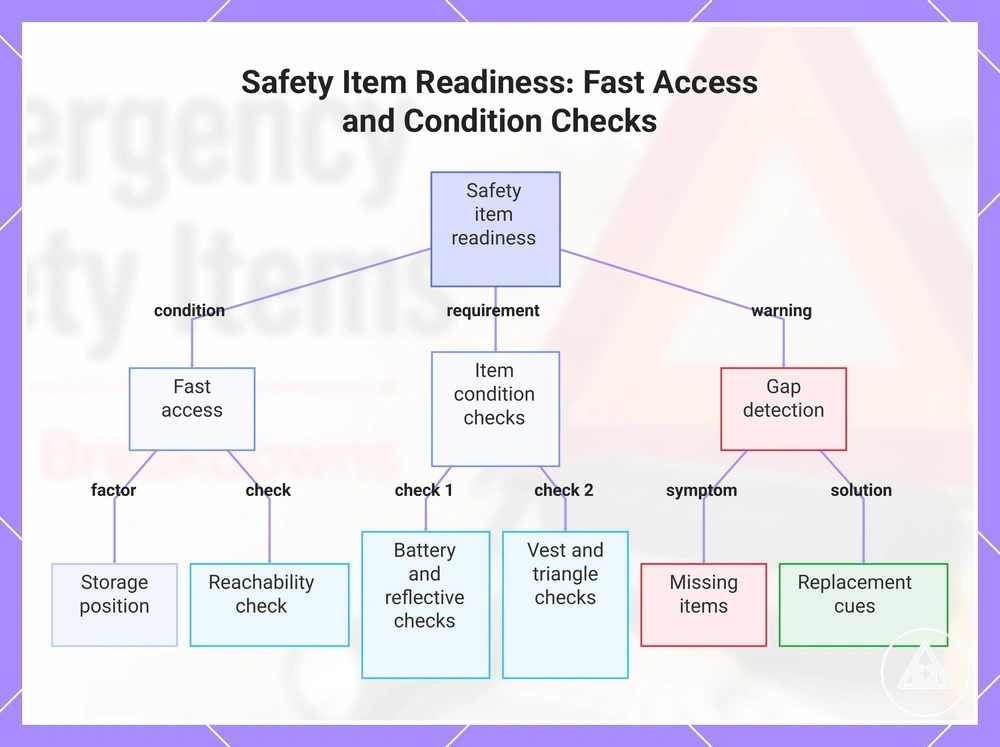
Safety item readiness depends on whether the items are reachable, visible, powered, intact, and checked before they are needed. A safety item remains useful when readiness combines fast access with item condition.
Fast access starts with storage position because roadside safety gear may be harder to use if it is buried under luggage or stored away from the driver. A high-visibility vest, warning triangle, flashlight, or warning light should be placed where it can be reached without unnecessary searching. Storage position affects how quickly reachable gear can support a roadside stop.
- Access: Check whether key safety items can be reached quickly from their storage position.
- Batteries: Use battery checks for a flashlight, headlamp, roadside warning light, or safety beacon.
- Reflective surface: Look for dirt, fading, cracks, or damage that may reduce visibility.
- Vest reachability: Keep reflective wear reachable before leaving the vehicle when conditions allow.
- Triangle stability: Check whether the warning triangle base remains intact and able to stand properly.
- Missing items: Identify gaps when safety gear has been removed, damaged, or misplaced.
- Replacement cues: Replace worn, missing, unpowered, or reduced-function items when condition checks show a problem.
Readiness criteria should stay tied to safety use rather than become a full storage guide. Battery checks, reflective surface condition, vest reachability, and triangle stability each show whether an item can still perform its safety role. For placement and access context, see storing safety items for fast access.
Condition checks help identify items that may need attention before a roadside problem happens. A damaged reflective surface, weak battery, unstable marker base, or missing vest can reduce readiness in practical use. Replacement cues should be based on visible wear, missing parts, battery failure, or reduced function.
When choosing what to keep ready, focus on the items most likely to help visibility, warning, lighting, and personal protection during a roadside stop. Readiness decisions can vary with storage space, driving conditions, item wear, and how often the kit is used, so the goal is accessible and functional safety gear rather than a refill list.
Here are product examples that may make comparison easier. Before buying, always review the compatibility criteria, essential features, and product details.
This chart shows the key factors and checks that determine whether safety items are ready for use during a roadside stop.
Common Roadside Safety Item Questions
What roadside safety items are usually included in a car emergency kit?
Roadside safety items usually include visibility, warning, lighting, and personal protection gear. A warning triangle, high-visibility vest, emergency flashlight, roadside warning light, and related safety gear can support visibility and roadside awareness, although kit contents may vary.
Is a warning triangle enough on its own?
No, a warning triangle is only one type of roadside safety item. Visibility conditions, traffic exposure, and the availability of other warning items can affect what support may be appropriate during a roadside stop.
Should a high-visibility vest be stored inside the passenger area?
A high-visibility vest is often most useful when it can be reached quickly before leaving the vehicle. Safe storage depends on vehicle layout, access speed, and whether the vest remains easy to retrieve when needed.
Can an emergency flashlight replace a roadside warning light?
No, an emergency flashlight and a roadside warning light serve different purposes. An emergency flashlight mainly supports illumination, while a roadside warning light focuses on signalling and visibility to others.
When should battery checks be performed on safety lighting items?
Battery checks are helpful before battery failure affects readiness. Timing depends on use, storage conditions, battery type, and whether the emergency flashlight or roadside warning light remains ready for use.
Does safe storage matter for roadside safety items?
Yes, safe storage supports readiness and fast access. Roadside safety items may be less useful when they are difficult to reach, damaged during storage, or stored where condition checks are overlooked.
Can reflective gear lose effectiveness over time?
Yes, reflective gear can show wear that may reduce visibility support. Condition checks can help identify fading, damage, or other signs that suggest replacement may be appropriate.
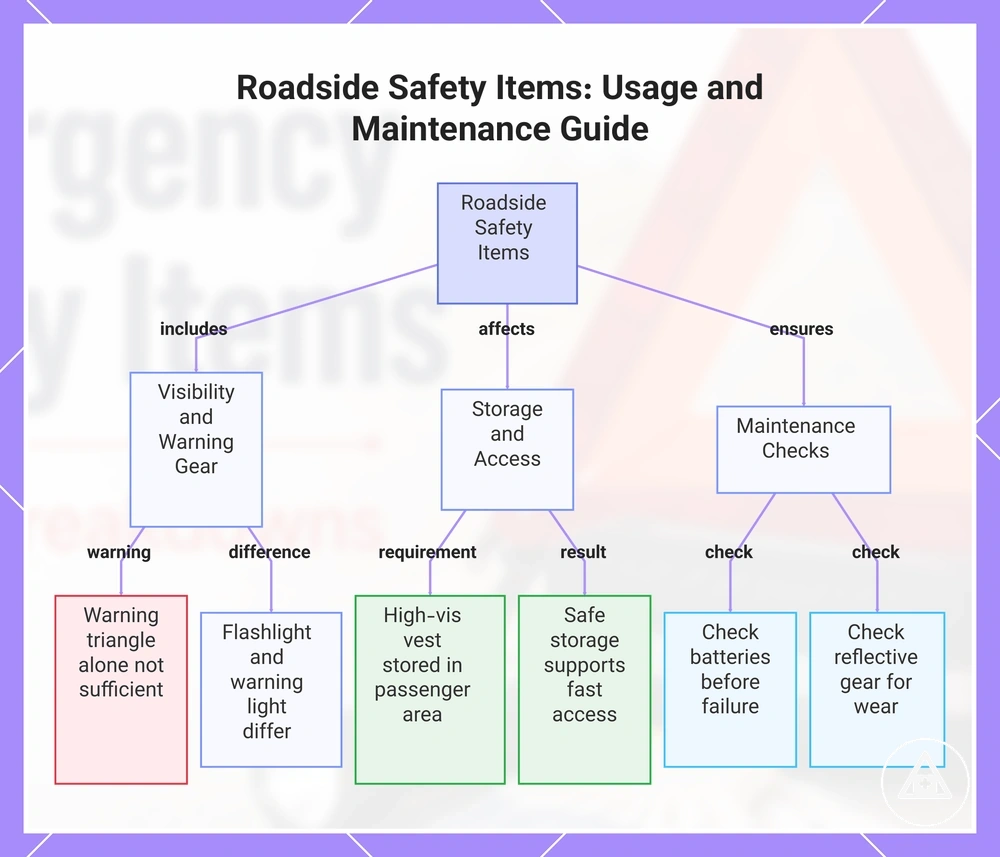
This chart outlines key considerations for roadside safety items, including gear types, storage and access recommendations, and maintenance checks.