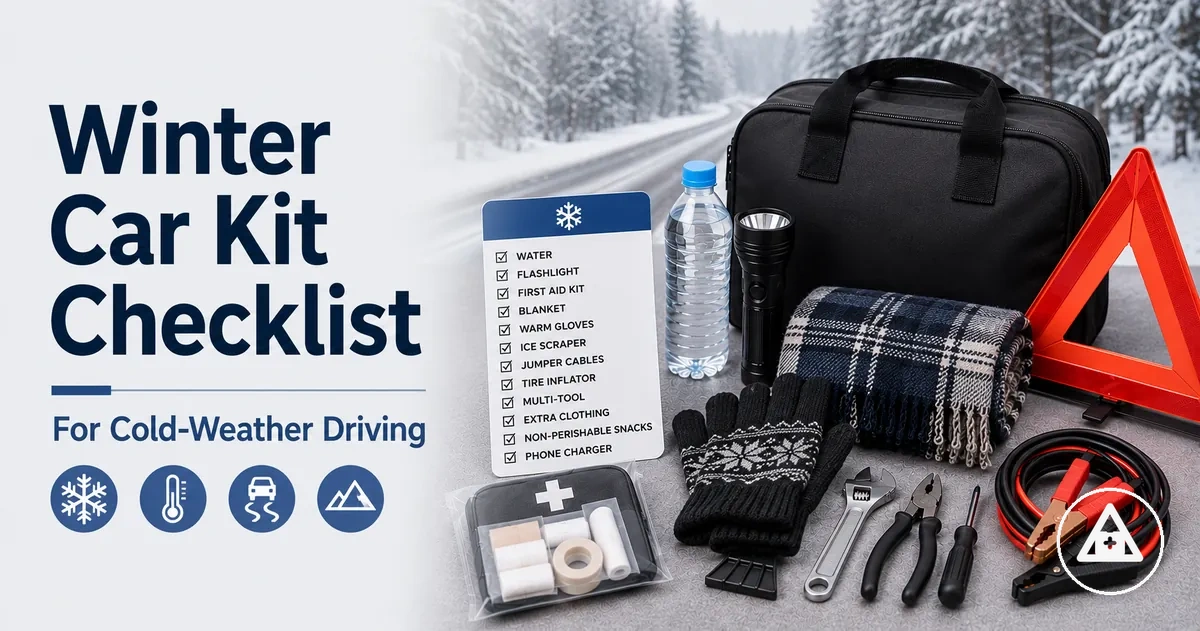
Winter car emergency kit checklist for cold-weather readiness
A winter car emergency kit is a baseline vehicle kit with winter-specific additions for cold-weather driving. It keeps the car emergency kit focused on roadside delay, exposure, visibility, mobility, and seasonal check needs. The main frame is cold-weather readiness.
Winter readiness adds warmth, visibility, snow and ice tools, traction support, and battery support around the items a driver may already keep in the vehicle. These additions help the kit respond to winter conditions without turning it into a repair kit or a product list. The depth of the kit depends on local climate, trip length, vehicle condition, storage space, and roadside exposure. For the broader year-round scope, use the car emergency kit guide.
Cold exposure, poor visibility, stuck vehicles, and cold-start issues create different needs during a winter roadside stop. Warm layers and blankets support occupants during a delay, lighting and warning items support visibility, snow and ice tools support clearing, and traction or battery items may support movement or starting when conditions allow. The checklist below should be read as a readiness layer, not as a guarantee of any roadside outcome.
Short urban winter drives may need a compact cold weather roadside emergency kit with fast-access warmth, lighting, scraper, and phone-power support. Remote routes, long-distance driving, heavier snow, or longer roadside exposure may justify deeper winter car safety supplies if storage space allows. The right seasonal check depends on the route, forecast pattern, vehicle condition, and how far help may be from the roadside stop.
The winter car emergency kit checklist verifies the main winter-specific additions before item-level sections begin. Use it to separate baseline contents from the extra cold-weather readiness layer.
- Warmth: Check blankets, gloves, hats, warm layers, and other occupant supplies for cold exposure during a roadside delay.
- Visibility: Check flashlight access, backup power, warning items, and high-visibility clothing for low light, snow, rain, fog, or traffic.
- Snow and ice tools: Check a scraper, brush, shovel, or compact clearing tool based on local frost, snow, and storage space.
- Traction support: Check sand, non-clumping cat litter, traction mats, or traction boards only as condition-based grip support for snow or ice.
- Battery support: Check jumper cables or a portable jump starter for compatibility, charge level, storage condition, and safe-use instructions.
- Seasonal check: Review missing, expired, discharged, wet, or inaccessible items before winter driving conditions become likely.
What changes in a car emergency kit for winter conditions
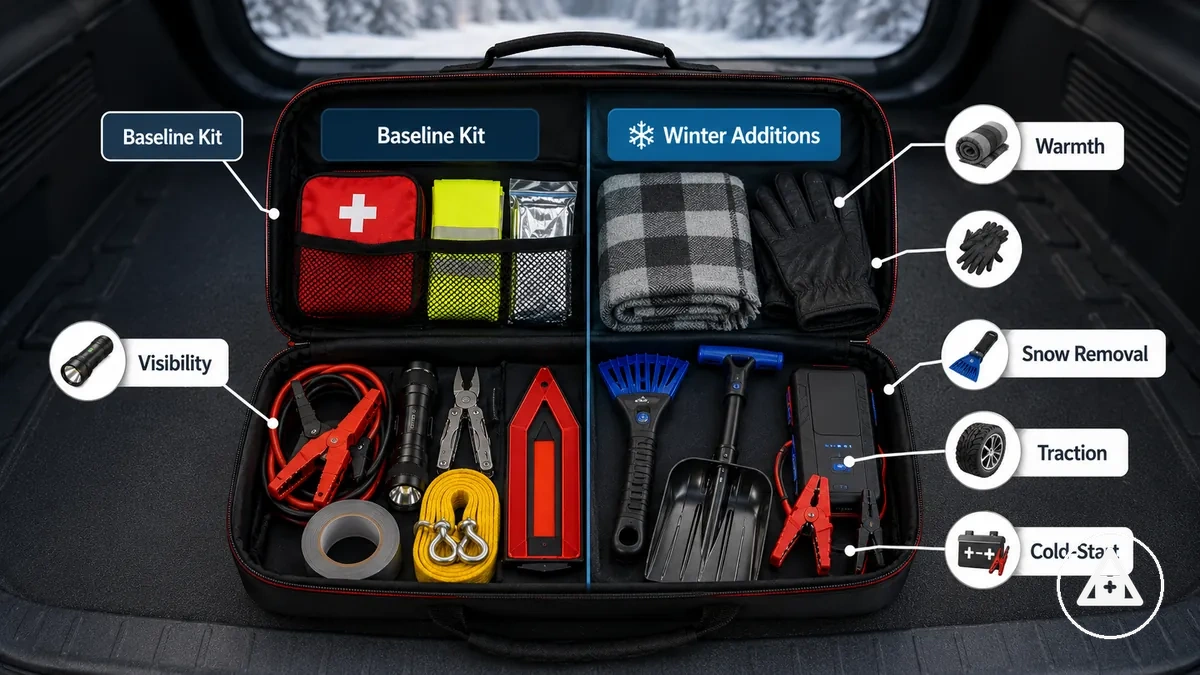
What changes in a car emergency kit for winter conditions is the addition of warmth, visibility, snow removal, traction, and cold-start support around the baseline kit. These winter-specific additions help address exposure, roadside delay, ice, snow, and reduced vehicle readiness during colder months. The baseline kit remains important, while winter-specific additions extend beyond standard year-round contents.
What changes in a car emergency kit for winter conditions becomes clearer when baseline contents and winter additions are compared directly. The image below distinguishes year-round contents from cold-weather additions that may become more relevant depending on local climate, driving distance, vehicle condition, and roadside exposure.
| Baseline kit area | Winter condition change |
|---|---|
| Warmth | Additional warmth-focused items may help reduce exposure during a roadside delay in winter conditions. |
| Visibility | Winter weather can increase the need for visibility support and clearer sightlines during snow, frost, or low-light conditions. |
| Snow and ice clearing | Snow removal and ice-clearing tools support vehicle access and visibility when frost, ice, or snow is present. |
| Traction | Traction support can assist movement when snow, slush, or ice affects grip. |
| Vehicle support | Cold-start support becomes more relevant when winter conditions may affect battery readiness. |
A baseline kit is the year-round foundation of a car emergency kit, while winter-specific additions address conditions that are more likely during colder periods. The relationship is additive rather than replacement-based: core contents remain, and cold-weather additions are layered onto the baseline kit when winter conditions are expected. For the year-round foundation, see core emergency kit contents.
Winter conditions can vary by climate, route length, storage space, vehicle condition, and expected roadside exposure. As these factors change, seasonal adjustments may also change, which is why not every driver needs the same winter roadside supplies. This distinction is part of a broader seasonal checklist used to align preparation with seasonal conditions.
Cold-weather survival supplies for occupants
Cold-weather survival supplies for occupants help address exposure, hydration, food access, and phone power needs during winter delays before vehicle recovery items become relevant. When a vehicle is delayed in cold conditions, occupants may need warmth supplies, water, shelf-stable food, and charging support while waiting for assistance or improved travel conditions. The mini-checklist below prioritizes occupant-focused supplies that support readiness during winter delays.
For short urban drives, a compact set of occupant supplies may be sufficient when support is usually nearby. Remote routes or long-distance driving can increase waiting-time risk, which may justify additional delay supplies, extra charging capacity, or more food and water when storage space allows. When route length materially changes kit needs, consider broader long-trip emergency kit planning.
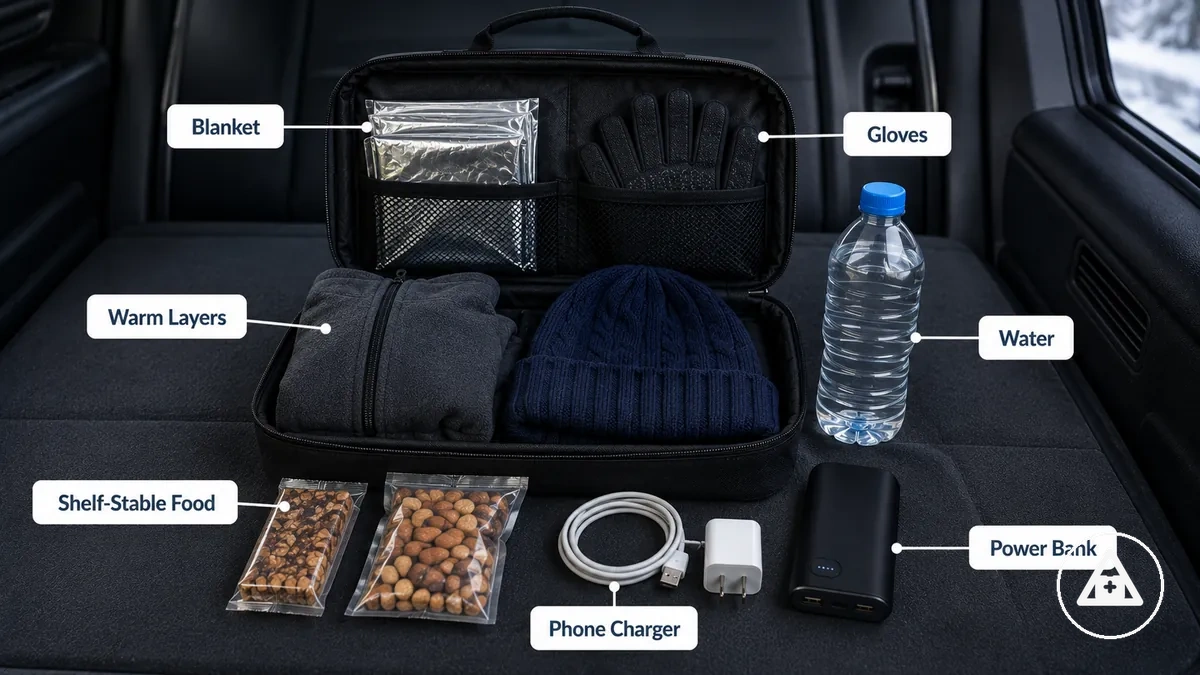
Cold-weather survival supplies for occupants should remain accessible and easy to review before travel. Use this mini-checklist to verify items according to the winter delay risks they help address.
- Blanket: Keep an emergency blanket or insulated blanket accessible to support warmth during cold-weather exposure and waiting periods.
- Gloves: Store gloves that support hand comfort and basic tasks during cold roadside conditions.
- Hat: Include a warm hat as an insulation-focused item for colder temperatures and extended winter delays.
- Warm layers: Keep spare warm layers available so occupants can adjust clothing when conditions become colder than expected.
- Water: Store water with attention to storage conditions and replacement needs, especially where freezing temperatures may occur.
- Shelf-stable food: Keep shelf-stable food that remains suitable for vehicle storage and supports longer waiting periods.
- Phone charger: Carry a charger that remains easy to access when communication or navigation support is needed.
- Power bank: Keep a charged power bank available because cold battery drain can contribute to reduced phone power in winter conditions.
Storage conditions, replacement schedules, local climate, and expected route exposure can influence which occupant supplies remain practical throughout winter. Review stored items periodically and replace supplies that are damaged, depleted, or no longer suitable for seasonal conditions.
Warmth and exposure protection items
Warmth and exposure protection items support occupants when vehicle heat is unavailable during a winter delay. Insulation and dryness are the main principles behind these items, helping reduce exposure while waiting in cold conditions. The bullets below verify warmth items through their insulation and dryness attributes and the conditions they help support.
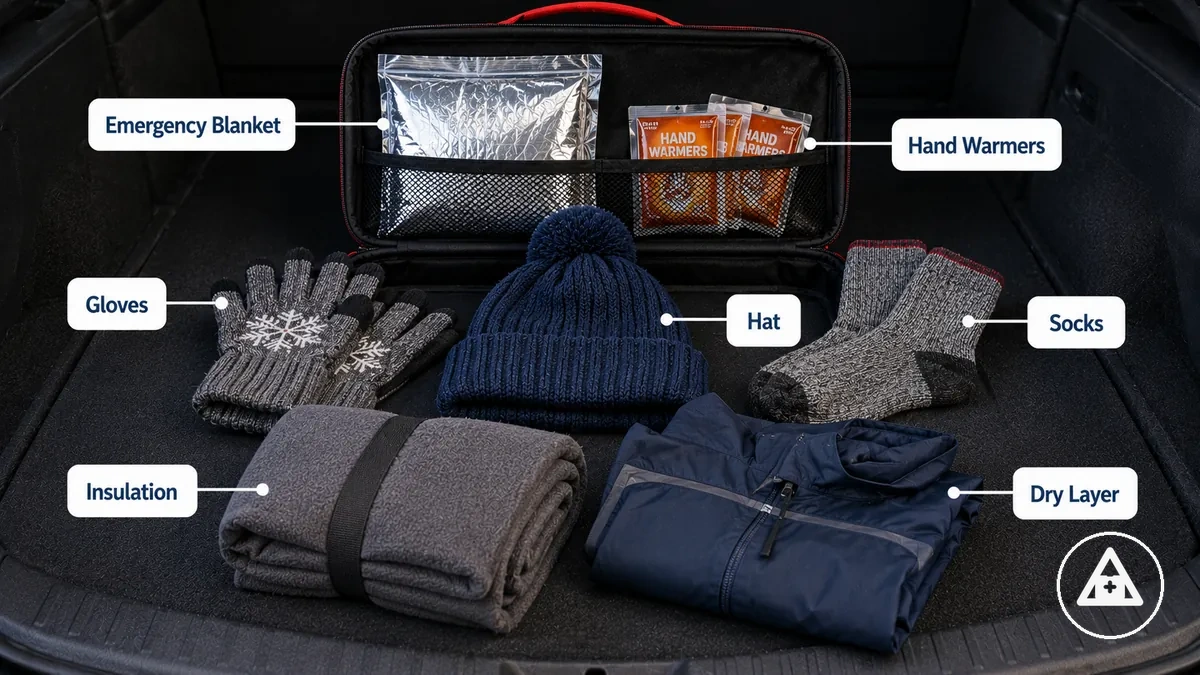
If clothing becomes wet, or if a delay occurs during wind or a night-time stop, dryness and insulation may become higher priorities. The appropriate combination of warmth items depends on conditions, delay length, and available storage space within the emergency kit.
- Emergency blanket: Insulation-focused item that supports occupant warmth during cold exposure and waiting periods.
- Gloves: Hand-insulation item that supports comfort and basic tasks in cold conditions.
- Hat: Insulation layer for the head that supports occupant warmth during colder temperatures or extended delays.
- Socks: Dry spare socks support warmth and comfort when moisture or cold conditions affect foot dryness.
- Hand warmers: Compact warmth item that may provide temporary support during periods of cold exposure.
- Dry outer layer: Dryness-focused layer that helps keep clothing dry when wind, damp conditions, or wet clothing affect occupant warmth.
Food, water, and phone-power supplies for delays
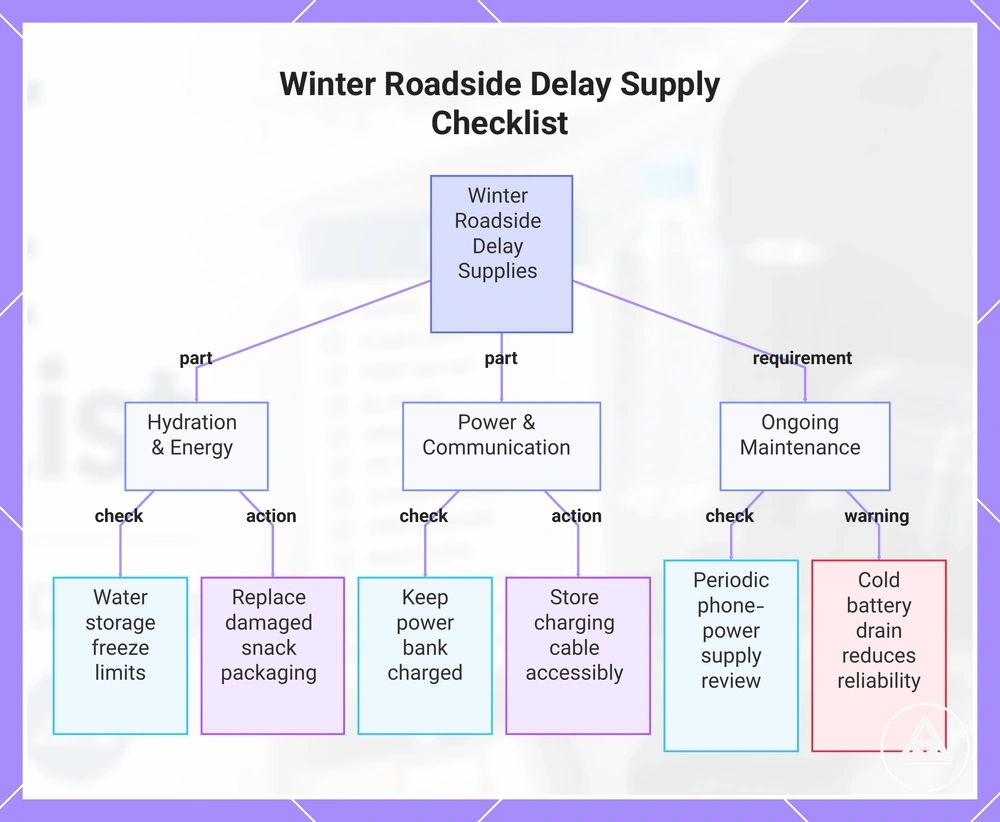
Food, water, and phone power supplies support hydration, energy, and communication during a winter roadside delay. These delay supplies help occupants stay prepared when waiting conditions become uncertain and cold battery drain affects phone power. The checklist below verifies storage, replacement, and phone-power support for key items.
For longer routes or situations where a remote delay may be more likely, replacement checks and backup power can become higher priorities. Route length, freezing conditions, and cold battery drain may affect how often supplies need review; for broader route-based preparation, see long-trip emergency kit planning.
- Water: Check storage limits where freezing may occur and use a replacement cue if stored water has been exposed to unsuitable conditions.
- Shelf-stable snacks: Store shelf-stable snacks suitable for vehicle storage and replace them when packaging is damaged or storage quality is uncertain.
- Power bank: Keep backup power charged, review charge status regularly, and recharge as a replacement cue when stored power becomes low.
- Charging cable: Store a charging cable in an accessible location and replace it if wear, damage, or connection issues appear.
- Phone-power supplies: Check portable charger and backup power items periodically because cold battery drain may reduce phone-power reliability during a winter roadside delay.
This chart shows the essential supplies for a winter roadside delay and the key checks, replacement actions, and maintenance requirements to stay prepared.
Roadside visibility and emergency safety items
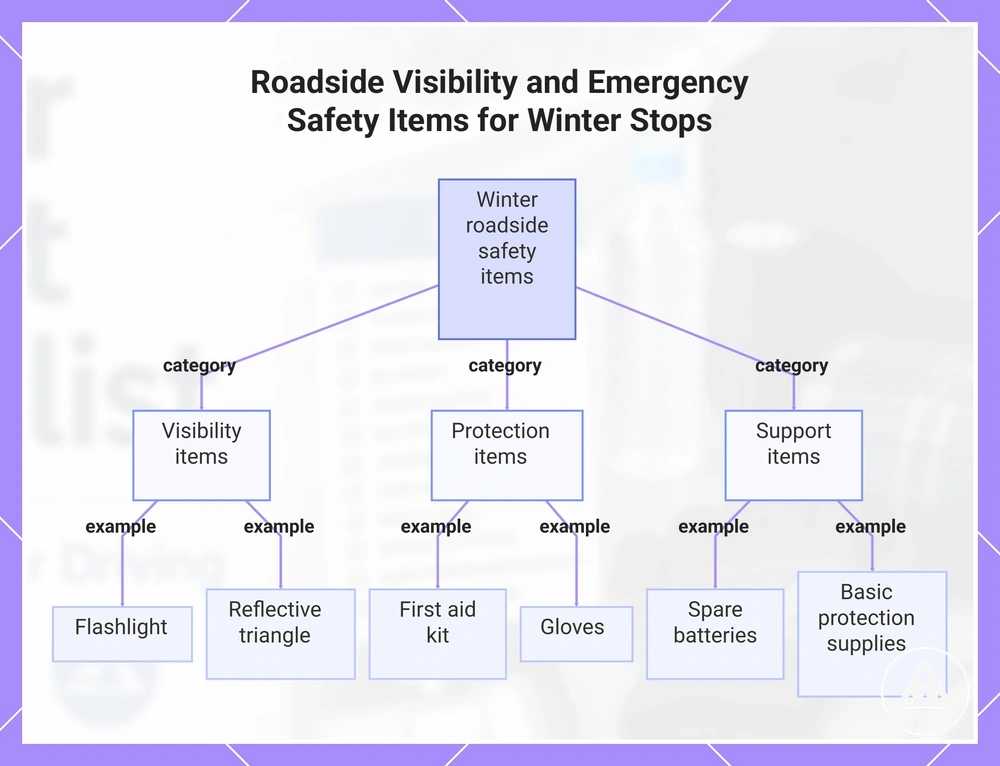
Roadside visibility and emergency safety items help reduce visibility and exposure risks during a winter stop. Low light, snow, rain, fog, and roadside traffic can make it harder for a stopped vehicle or occupants to be noticed. A flashlight, reflective triangle, high-visibility clothing, and other emergency safety items support roadside visibility and basic protection.
During a winter stop in low light, snow, rain, fog, or near traffic, being seen and keeping basic protection accessible become separate but related priorities. Visibility items help signal presence, while protection items support winter roadside use without becoming part of a broader roadside procedure. The checklist below verifies roadside visibility and emergency safety items for visibility and protection readiness.
The minimum safety focus is keeping visibility items and basic protection supplies accessible when a winter stop occurs. Visibility and protection support can vary with weather, location, traffic conditions, and accessibility of the items.
- Flashlight: Visibility item that improves sight in low light conditions and remains most useful when easy to access during a winter stop.
- Reflective triangle: Warning signal that helps indicate vehicle presence when snow, fog, rain, or darkness reduce visibility.
- High-visibility clothing: Reflective gear that supports being seen more easily during a roadside stop near traffic or in poor visibility.
- First aid kit: Basic protection item that should remain accessible when minor support supplies may be needed during winter roadside use.
- Gloves: Protection item that supports hand comfort and basic roadside tasks in cold or wet conditions.
- Spare batteries: Backup power item that supports flashlight readiness when cold conditions may affect battery performance.
- Basic protection supplies: Roadside safety gear that supports preparedness and accessibility during winter roadside conditions.
This chart categorizes roadside safety items for winter stops into visibility, protection, and support groups, with key examples for each.
Flashlight, batteries, and warning signals
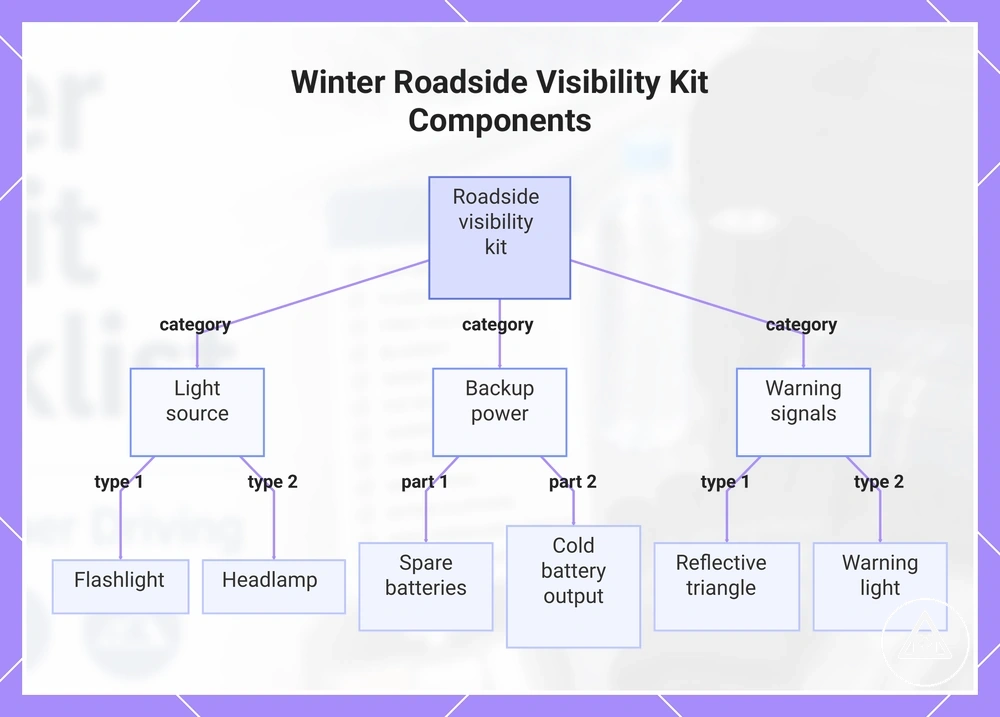
Flashlight, batteries, and warning signals support roadside visibility during a winter stop when low light and reduced visibility make it harder to see or be seen. Keeping lighting and warning items accessible improves readiness by combining a light source, backup power, and visibility signals.
In low light conditions or when gloves make handling equipment less convenient, a headlamp can provide hands-free illumination while a flashlight remains easy to access. Cold-related battery performance may vary with temperature and storage conditions, and the suitability of warning signals can depend on local road-safety expectations.
Flashlight, batteries, and warning signals can be organized by light source, backup power, and warning function:
- Flashlight: Light source that provides illumination in low light conditions, with brightness supporting visibility when quick access is needed.
- Headlamp: Hands-free light source that can remain useful when gloves are worn and both hands are needed for basic roadside tasks.
- Spare batteries: Backup batteries support readiness when stored with a flashlight or headlamp and checked periodically for charge or condition.
- Cold-related battery performance: Battery output may be reduced in colder conditions, making backup batteries and storage checks part of winter readiness.
- Reflective triangle: Warning signal that helps indicate vehicle presence when darkness, snow, rain, fog, or nearby traffic reduce visibility.
- Warning light: Visibility signal that may supplement other warning signals when appropriate for local conditions and available equipment.
This chart shows the three main categories of items that support roadside visibility during a winter stop: light source, backup power, and warning signals.
First aid and basic roadside protection
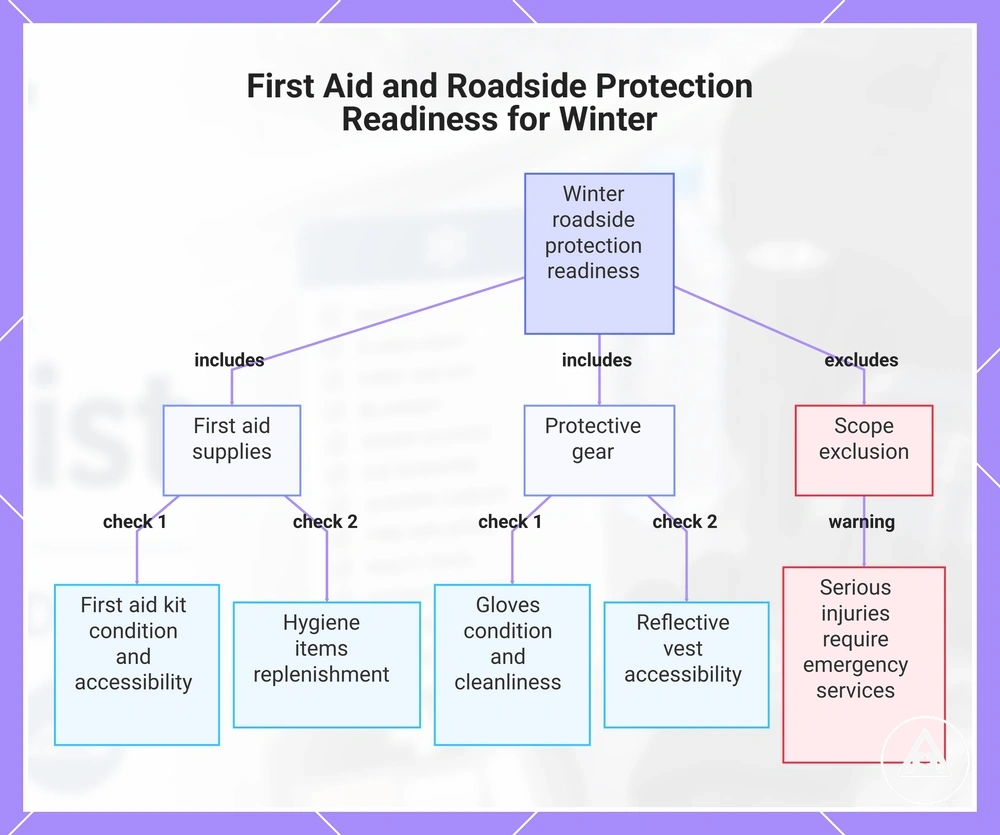
First aid and roadside protection support winter kit readiness by keeping essential supplies accessible during a winter roadside stop. Accessible first aid supplies, protective gear, and hygiene items can support minor issues while helping maintain basic protection in cold or wet conditions. The readiness checks below focus on condition, accessibility, and winter roadside use.
Serious injuries may require emergency services rather than an accessible kit alone. This section stays focused on first aid and roadside protection readiness and keeps serious injury handling outside the scope of winter roadside use.
First aid and basic roadside protection checks help verify that accessible safety supplies remain ready for winter roadside use:
- First aid kit: Check first aid kit condition and accessibility so first aid supplies remain available during a winter stop.
- Disposable gloves: Keep disposable gloves clean and accessible to support hygiene items, protection, and minor issue handling when needed.
- Protective gloves: Check protective gloves for condition and accessibility to support hand protection during winter roadside use.
- Reflective vest: Keep a reflective vest accessible because visibility support may become more important near roadside traffic.
- Hygiene items: Review hygiene items periodically and replace depleted supplies to maintain readiness and accessibility.
This chart shows the key supply categories and checks for first aid and protection readiness during winter roadside stops.
Snow and ice clearing tools
Snow and ice clearing tools support visibility and mobility by helping remove winter obstructions from windows, lights, mirrors, and areas affected by packed snow around the vehicle. Different winter obstructions often require different tools, and storage space can influence which items fit into a winter car emergency kit. Common snow and ice clearing tools include an ice scraper, snow brush, folding shovel, gloves, and compact storage support.
In mild frost areas, an ice scraper may cover most ice removal needs affecting windshield visibility. If heavy-snow routes are more likely, a snow brush or folding shovel may provide additional support for snow buildup on lights, mirrors, or packed snow near wheels. The table below organizes snow and ice clearing tools by task and storage space.
| Tool | Clearing task | Useful condition | Storage note |
|---|---|---|---|
| Ice scraper | Clear frost and ice from windows and windshield areas | Mild frost that affects visibility | Usually fits compact storage areas |
| Snow brush | Remove snow from windows, lights, and mirrors | Snow buildup that reduces visibility | Storage needs vary by brush size |
| Folding shovel | Move packed snow near wheels or around the vehicle | Heavier snow conditions that may affect mobility | Compact folding designs can reduce storage demands |
| Gloves | Support access to winter clearing tools | Cold or wet winter obstruction conditions | Easy to keep with other clearing tools |
| Compact storage support | Keep snow and ice clearing tools organized and accessible | Limited emergency-kit or cargo space | Helps tools fit within available storage space |
Compact storage is often the first storage priority because snow and ice clearing tools are most useful when they remain easy to reach. The most suitable combination depends on climate, route conditions, vehicle size, and available storage space.
Ice scraper and snow brush
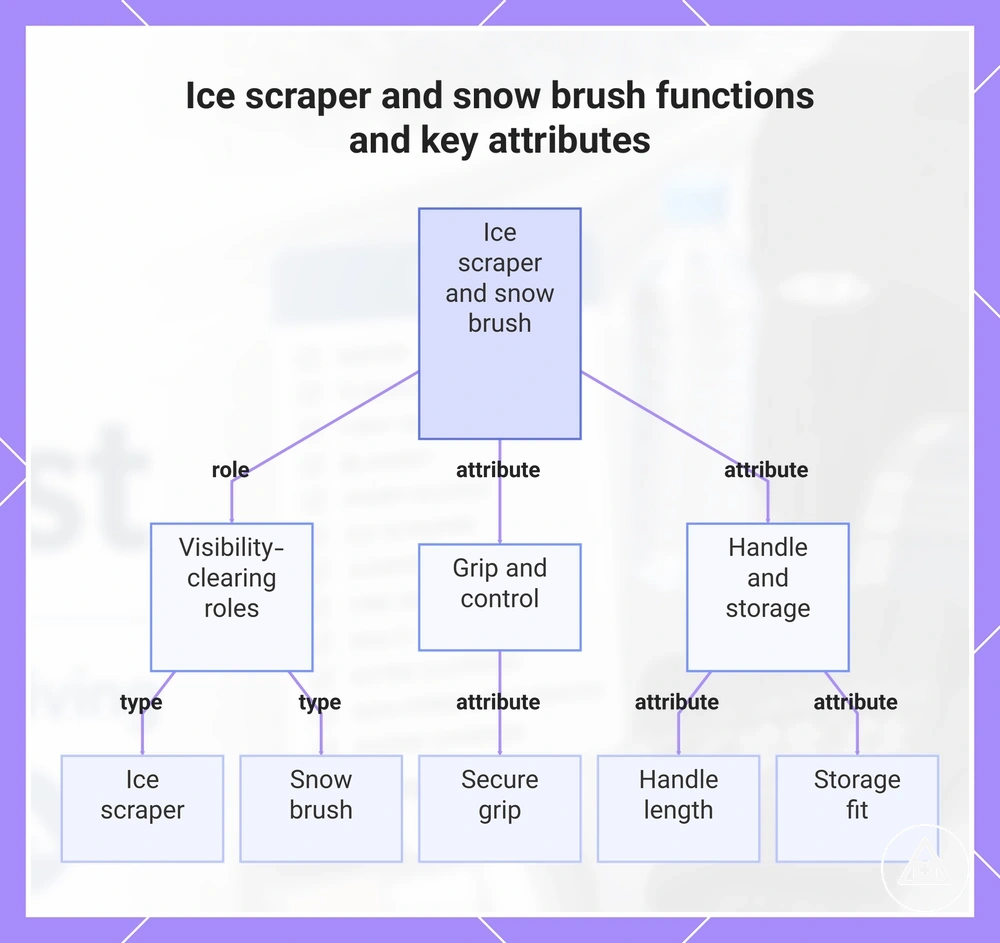
Visibility loss from frost, ice, and snow buildup can make a windshield, mirrors, and lights harder to clear during winter conditions. An ice scraper and snow brush address different visibility-clearing tasks, with the scraper edge used for frost and ice and the brush head used for snow buildup.
For larger vehicles or heavier buildup, handle length, grip, and reach may become more important when accessing wider windshield areas, mirrors, or lights. Storage fit can vary by vehicle size, available space, and winter kit layout.
Ice scraper and snow brush functions can be separated by their visibility-clearing roles and access attributes:
- Ice scraper: A scraper edge helps scrape frost and ice from a windshield and other glass surfaces when frozen buildup reduces visibility.
- Snow brush: A brush head helps clear snow buildup from windows, mirrors, and lights to improve visibility.
- Grip: A secure grip can support better control of a clearing tool when conditions are cold or wet.
- Handle length and reach: Additional reach may help access more distant areas on a larger vehicle, depending on vehicle size and clearing conditions.
- Storage fit: A compact tool may fit more easily within a winter kit while remaining accessible when frost, ice, or snow needs attention.
This chart illustrates the visibility-clearing roles and key access attributes of an ice scraper and snow brush.
Folding snow shovel for vehicle recovery
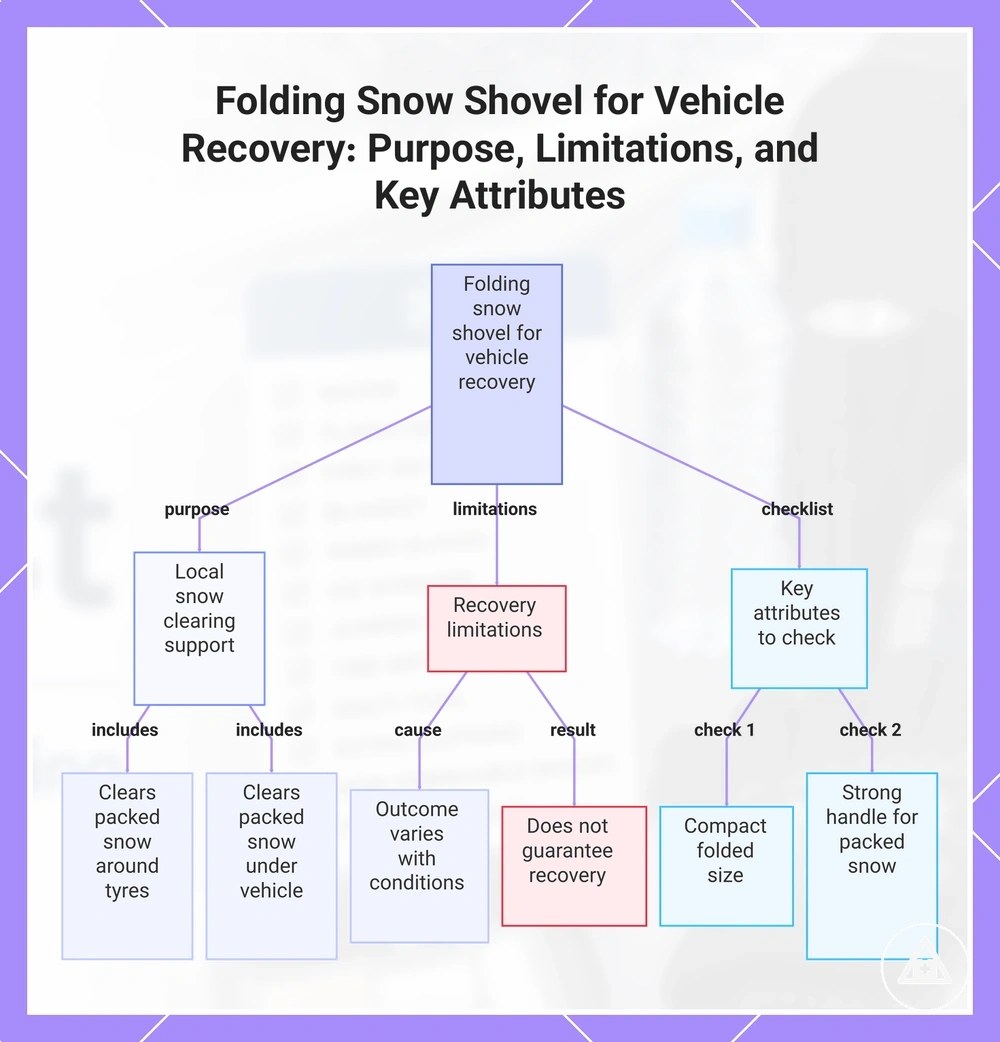
A folding snow shovel helps clear packed snow around tyres or under the vehicle when local vehicle recovery depends on removing nearby snow buildup. It supports local snow clearing but does not guarantee vehicle recovery because recovery outcomes can vary with snow depth, ice, vehicle clearance, and roadside conditions. Its purpose is limited to local recovery support around tyres and under the vehicle.
Packed snow can restrict wheel movement or reduce clearance beneath the vehicle, making shovel attributes important for storage and access. Folding snow shovel for vehicle recovery attributes should be checked before winter travel, and the checklist below verifies key features for local snow clearing.
Folding snow shovel for vehicle recovery attributes can be checked through the following criteria:
- Folded size: A compact folded size can fit more easily within a winter kit and support quick access when snow clearing is needed.
- Handle strength: Handle strength supports use in packed snow conditions and may influence how the shovel performs during local clearing tasks.
- Blade material: Blade material affects how the shovel engages with packed snow around tyres or under the vehicle.
- Grip: A secure grip can support better handling when clearing snow in cold or wet winter conditions.
- Use around wheels: A folding snow shovel can help clear packed snow near tyres or under the vehicle, but difficult recoveries, deep snow, ice, or unsafe roadside conditions may require roadside assistance.
This chart shows the purpose of a folding snow shovel for vehicle recovery, its limitations, and the key attributes to check before winter travel.
Traction aids for stuck vehicles in snow or ice
Traction aids for stuck vehicles in snow or ice can help only when tyre contact and surface conditions allow enough grip for movement. They work by adding a grip aid beneath or near the tyre contact area, but they do not guarantee vehicle recovery because snow depth, ice, vehicle position, and surface conditions can limit results. Their usefulness depends on available grip and the condition beneath the tyres.
When tyres spin on snow or ice, traction aids can add a more supportive surface between the tyre and the ground. Abrasive materials such as sand or non-clumping cat litter can add temporary grip, while traction mats and traction boards provide a reusable traction surface. The comparison block below compares traction support by surface condition and storage need.
| Aid type | Grip condition | Storage trade-off | Limitation |
|---|---|---|---|
| Sand | Abrasive material that may add temporary grip on snow or icy surfaces | Usually compact to store | Grip support depends on surface condition and placement |
| Non-clumping cat litter | Abrasive material that may improve tyre contact in some snowy or icy conditions | Often fits compact storage spaces | May provide limited support on heavily compacted ice |
| Traction mats | Reusable traction surface placed where tyre contact needs additional grip | Requires more storage space than loose abrasive material | Support depends on surface condition and placement |
| Traction boards | Reusable traction surface designed to increase available grip beneath tyres | Typically requires more storage space | Does not overcome all snow, ice, or vehicle-position limitations |
For icy surfaces, abrasive materials may be chosen when compact storage is the main priority, while traction mats or traction boards may suit situations where repeated use and reusable grip support are preferred. The most suitable traction aid depends on surface type, storage space, and tyre contact conditions, and movement may remain limited when grip cannot be established.
Abrasive materials for tyre grip
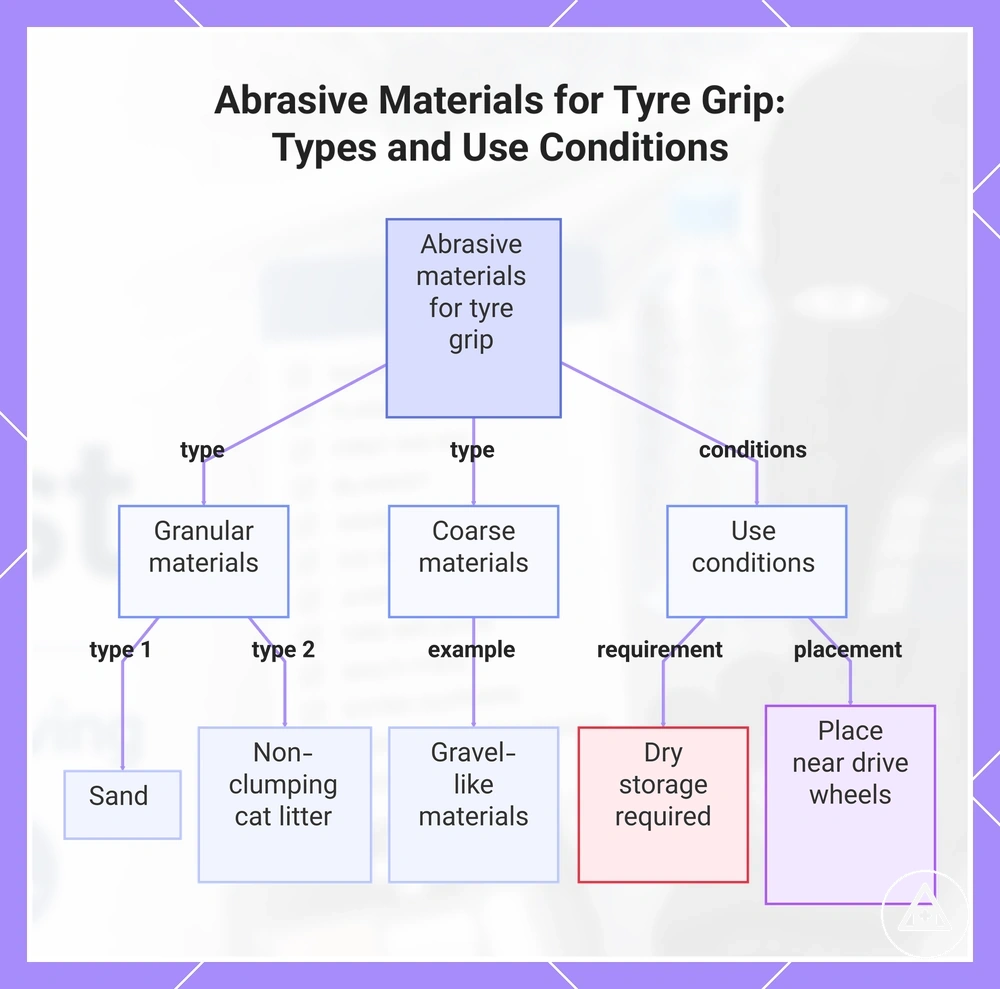
Abrasive materials for tyre grip can provide temporary grip support when low-traction snow or ice reduces tyre contact with the surface. These traction materials add texture beneath or near the tyres, but the grip effect depends on surface condition and may remain limited on glare ice or in deep snow.
Moisture can reduce the usefulness of loose abrasive materials, which makes moisture resistance and dry storage important considerations. Abrasive materials for tyre grip are most useful when kept dry and accessible, and the bullets below organize materials by texture, storage, and use condition.
- Sand: Sand provides a textured abrasive material that may improve tyre grip on snow-covered surfaces when placed near the drive wheels.
- Non-clumping cat litter: Non-clumping cat litter acts as a temporary grip material and may support tyre grip when stored dry and protected from moisture.
- Gravel-like materials: Gravel-like materials add surface texture that can support tyre grip in certain low-traction conditions, depending on the surface condition beneath the tyres.
- Moisture resistance: Dry storage helps abrasive materials retain their texture and remain available as a temporary grip aid when needed.
- Placement near drive wheels: Abrasive materials are typically most relevant when placed near the drive wheels, where tyre contact and available grip influence movement support.
This chart shows the main types of abrasive materials for tyre grip and the key conditions for their effective use.
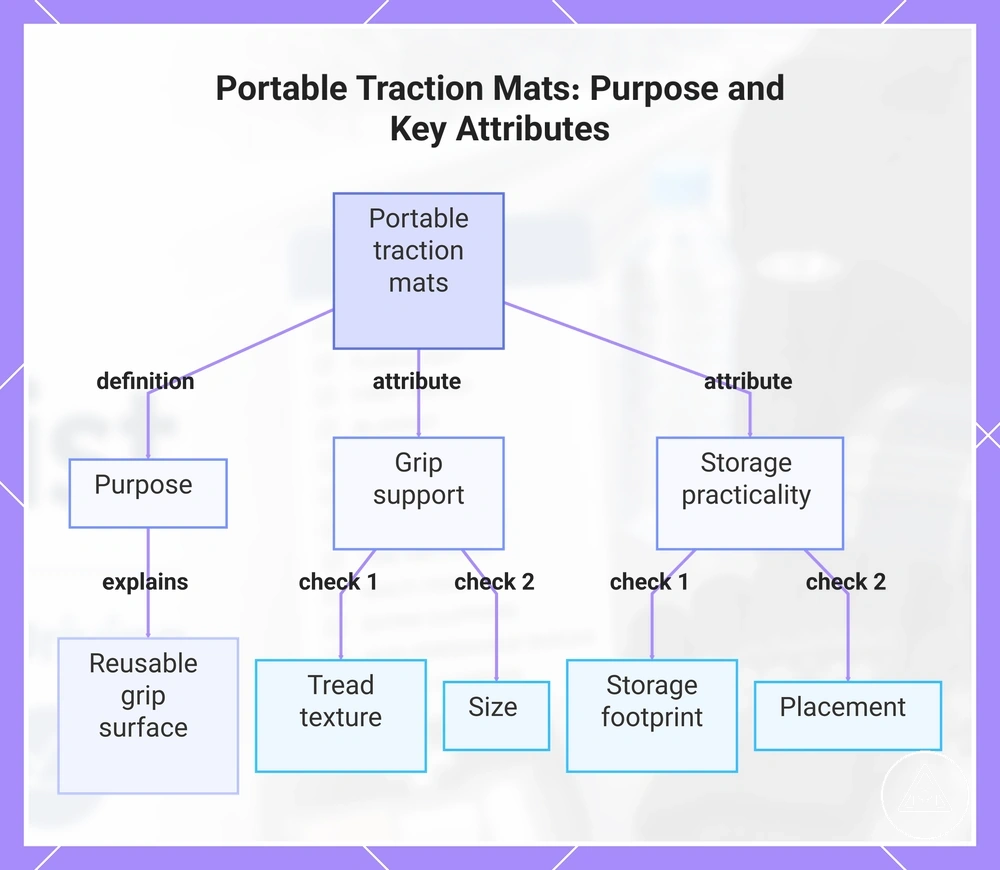
Portable traction mats or boards
When tyres lose grip on snow, slush, or light ice, portable traction mats and traction boards can provide a reusable grip surface that supports tyre contact with the ground. These reusable traction aids help only when placement and surface conditions allow usable grip, and their recovery support remains limited by the stuck condition.
Attribute priorities for portable traction mats and traction boards focus on how the reusable grip surface supports tyre contact while remaining practical to store and access. Portable traction mats or boards rely on physical traction attributes, and the checklist below verifies those attributes.
- Tread texture: Tread texture provides surface features that can support tyre contact and grip on snow, slush, or light ice when placement is suitable.
- Size: The size of a traction mat or grip board influences how much reusable grip surface is available beneath the tyre contact area.
- Flexibility: Flexibility may affect storage convenience and how a portable traction aid adapts to uneven surface conditions.
- Storage footprint: A smaller storage footprint can make portable traction mats or traction boards easier to keep within a compact winter roadside kit.
- Weight capacity: Weight capacity may influence how a reusable traction aid supports tyre contact under different vehicle and surface conditions.
- Placement: Placement near the tyre contact area is important because recovery support depends on how the reusable grip surface aligns with available traction.
This chart shows the main purpose of portable traction mats and the key attributes to check for grip support and storage practicality.
Vehicle support items for winter breakdowns
Vehicle support items for winter breakdowns help reduce delays and access problems when cold weather affects a vehicle, but they do not replace diagnosis or repair. Their role is to improve readiness for common winter vehicle problems while staying within safe roadside-support limits. The main support categories include battery, tyre, tow, and minor roadside needs.
Vehicle support items are most useful when grouped by the winter problem they support and the readiness attributes that affect their availability. The table below organizes vehicle support items for winter breakdowns by winter vehicle problem.
| Support item | Winter problem supported | Readiness check | Limitation |
|---|---|---|---|
| Jumper cables or jump starter | Cold-start support when battery-related starting issues occur | Check condition, accessibility, and vehicle compatibility requirements | Results may depend on battery condition and vehicle requirements |
| Tyre inflator | Tyre support when pressure loss affects vehicle readiness | Check operating condition and power availability | May not address all tyre-related problems |
| Pressure gauge | Tyre-pressure verification during winter conditions | Check accessibility and working condition | Measures pressure but does not correct tyre issues |
| Tow strap | Tow-related support where suitable recovery arrangements exist | Check condition and suitability for the intended use | Use depends on situation, compatibility, and safety considerations |
| Gloves | Minor roadside need requiring hand protection and access | Check condition and accessibility | Support item only and not a vehicle-recovery solution |
| Basic tools | Minor roadside support tasks | Check completeness and accessibility | Do not replace repair expertise or roadside assistance |
Battery and tyre readiness often depend on preparation before a breakdown occurs. Jumper cables, a jump starter, a tyre inflator, and a pressure gauge can support readiness checks, but compatibility and effectiveness may vary by vehicle condition and winter circumstances.
Tow support items and basic tools have practical limits that should be considered before use. A tow strap may be suitable only in appropriate situations, and roadside safety conditions can limit when support items are practical to use.
Practical selection checks focus on readiness, accessibility, condition, and suitability for the winter vehicle problems most likely to occur. Vehicle support items for winter breakdowns are most useful when they remain available before they are needed and when their limitations are understood.
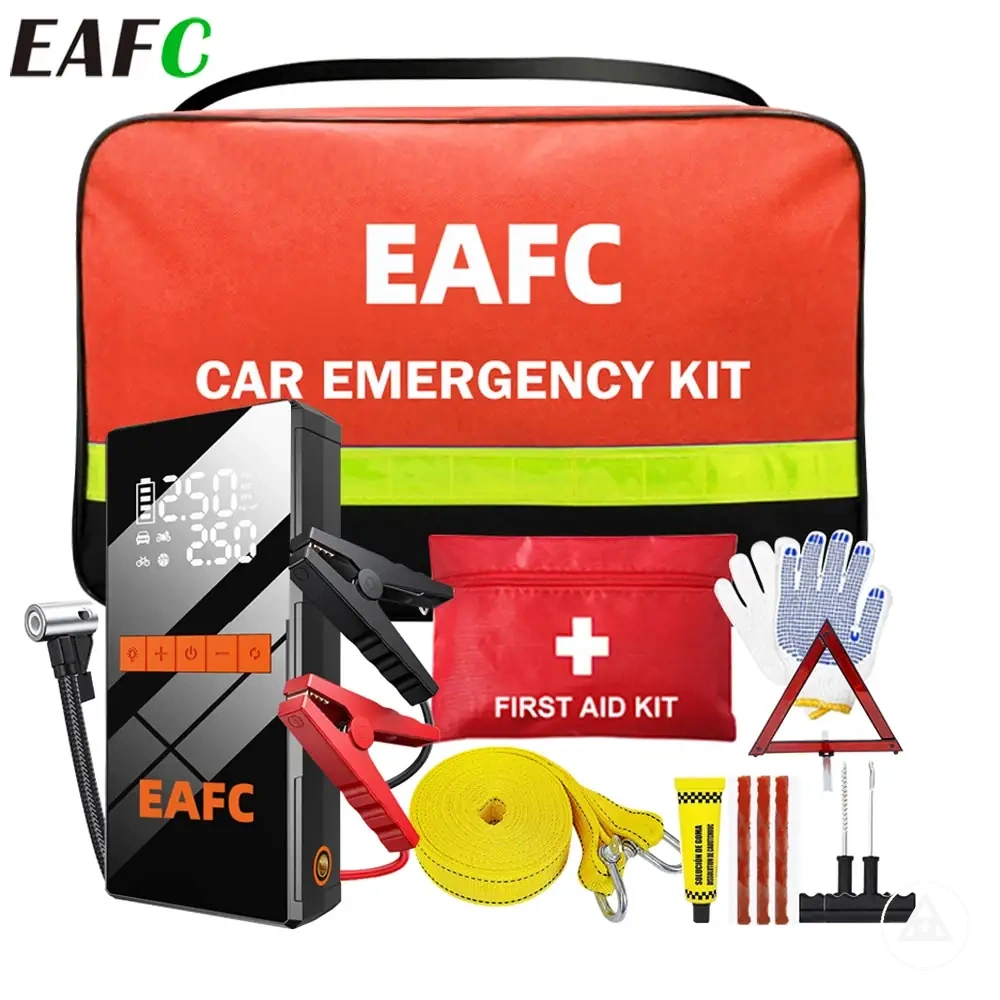
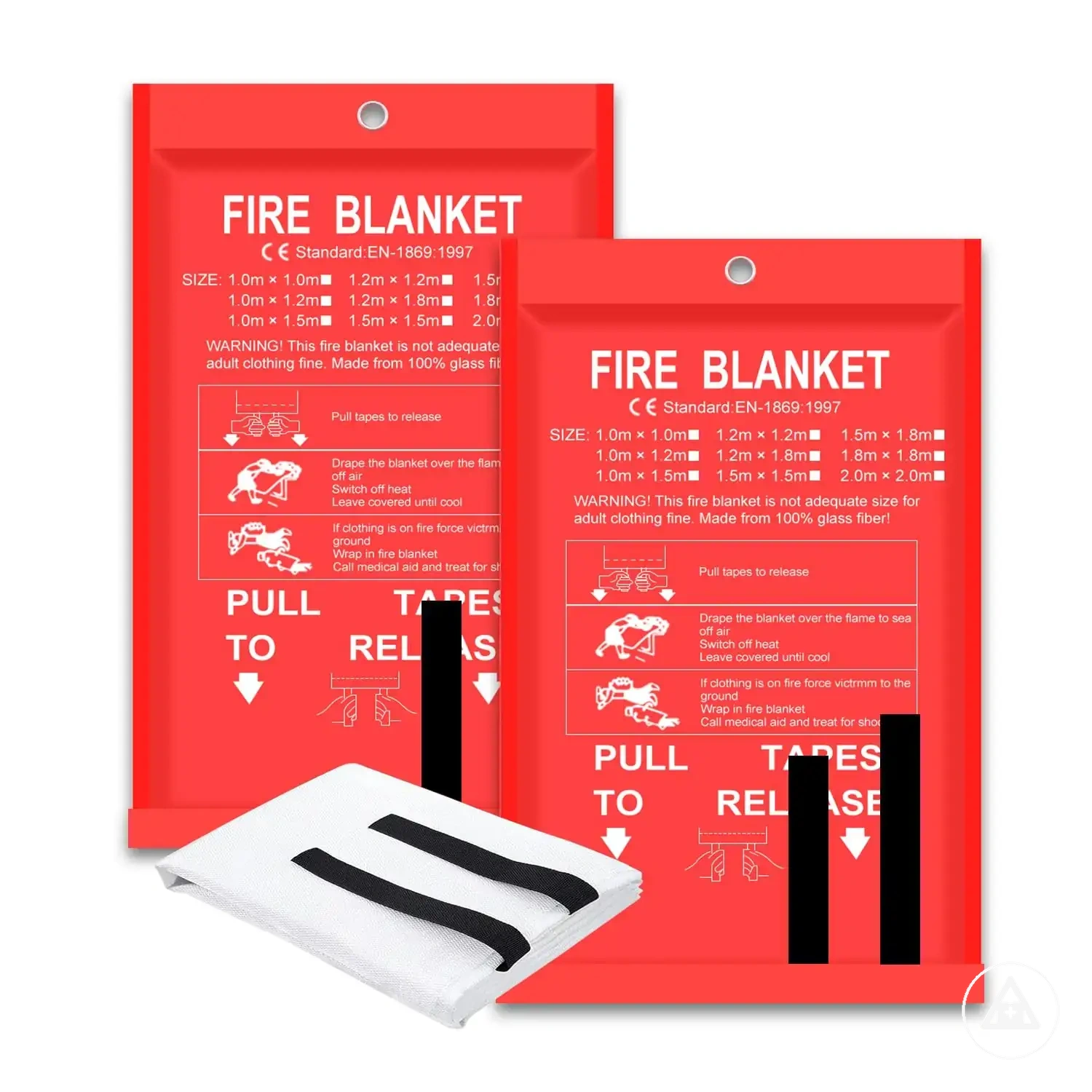
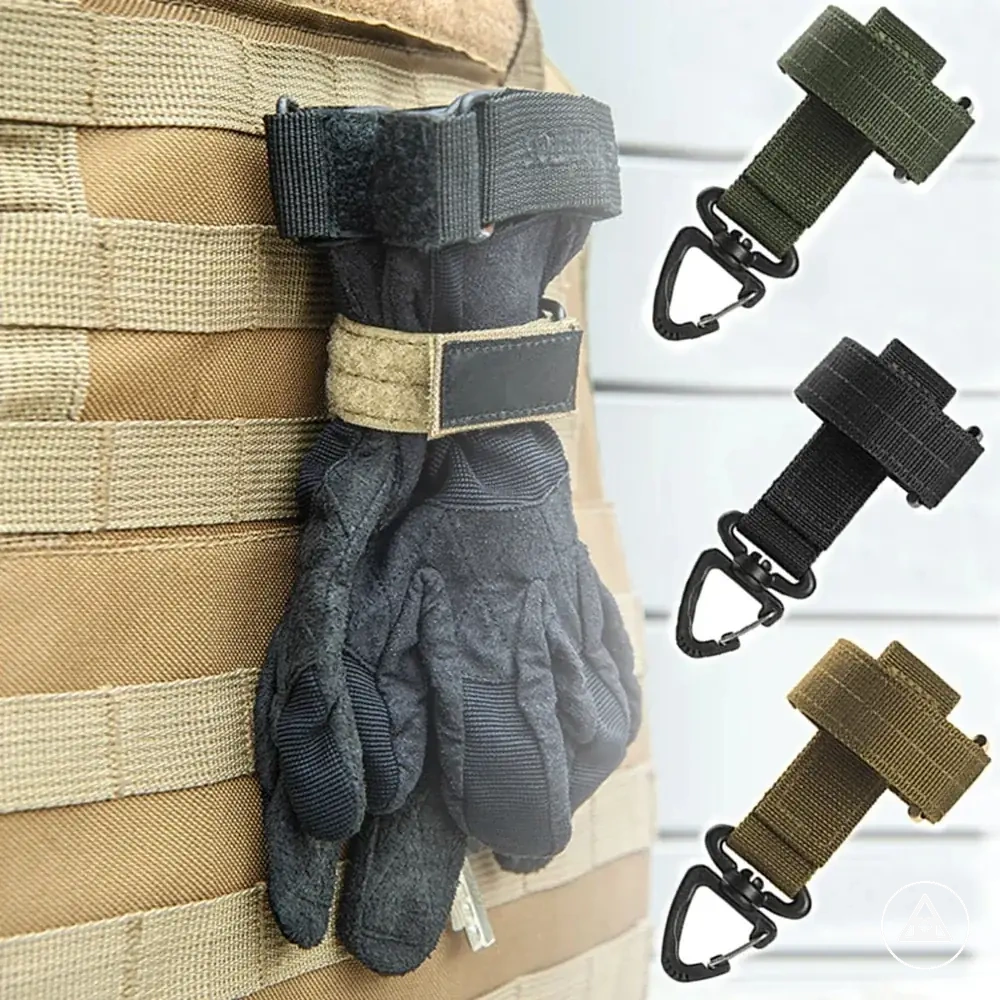
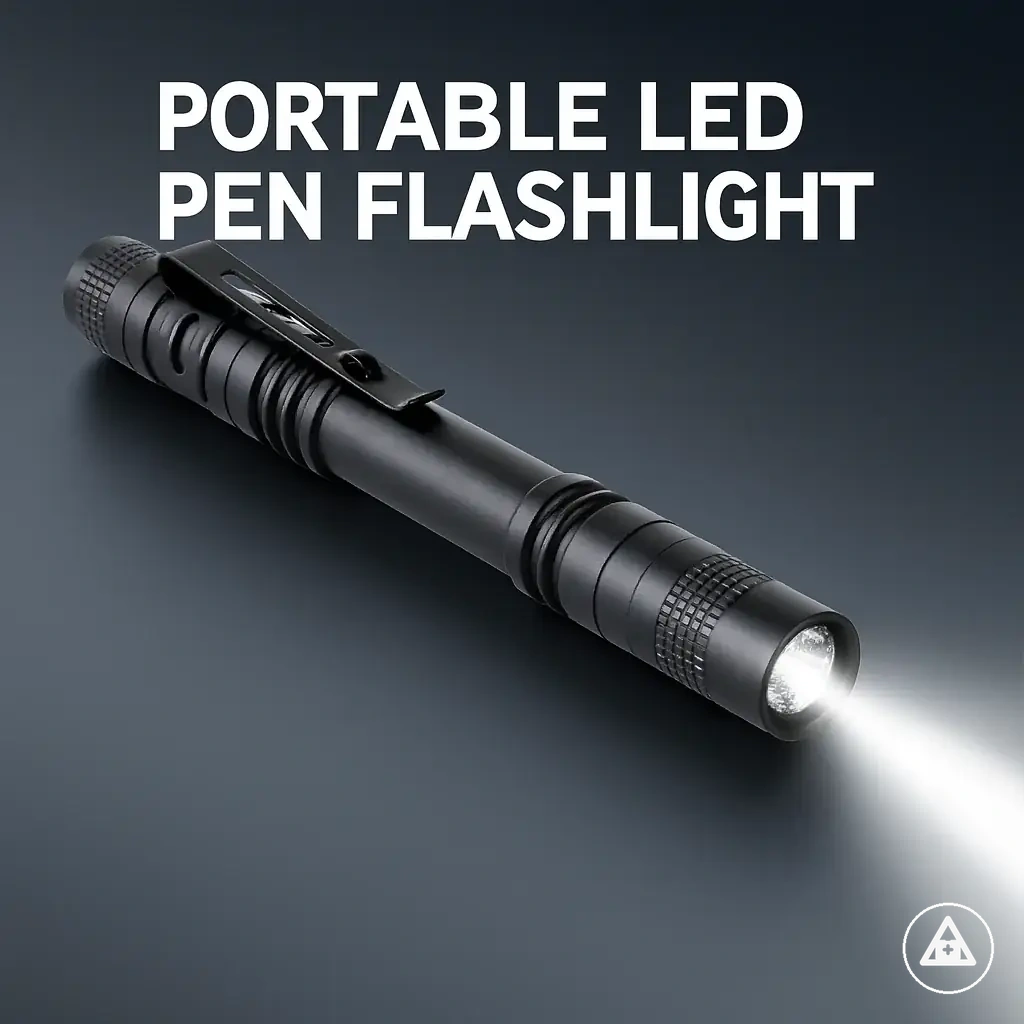
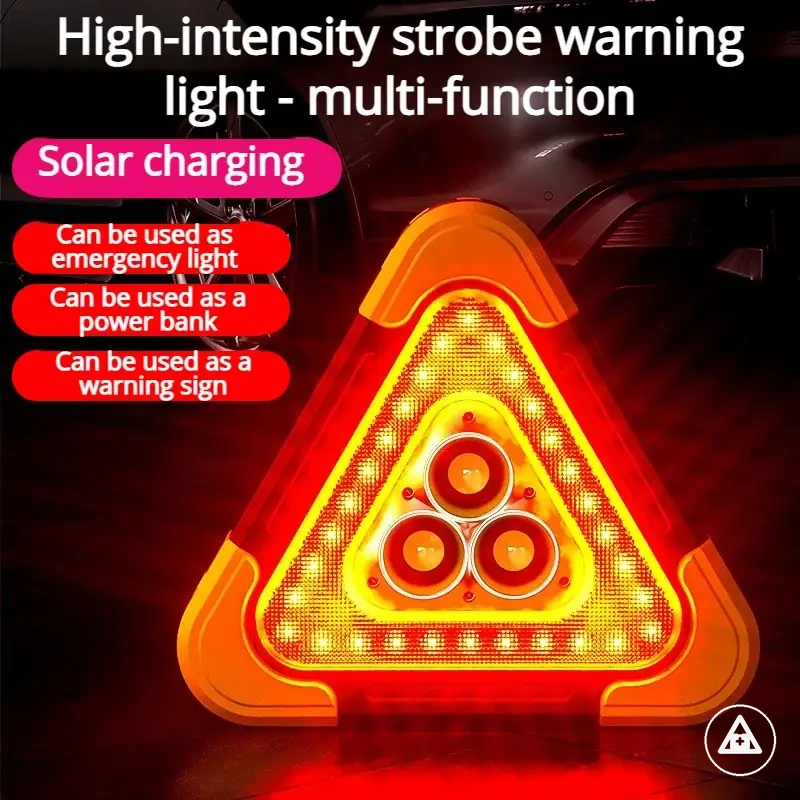
The products below are useful examples for comparing available options. Before buying, check that the compatibility criteria, key features, and product details match your needs.
Battery and jump-start support
Battery support and jump-start support become more important in cold weather because a cold-start condition can make starting assistance more relevant. Jumper cables or a portable jump starter may provide possible assistance when the vehicle will not start, but the outcome depends on battery condition, compatibility, charging level, and device suitability. This section focuses on readiness rather than jump-start procedure.
Compatibility and charge checks help prevent battery support items from becoming unusable when they are needed. Battery and jump-start support checks verify readiness rather than teach procedure, and users should follow vehicle and device instructions before attempting a jump start.
- Jumper cables: Check cable condition, accessibility, and compatibility with the vehicle before relying on them for cold-start support.
- Portable jump starter: Keep the portable jump starter charged and verify suitability for the vehicle before it is needed.
- Charging level: Review the charging level regularly because a discharged jump starter may not provide useful backup starting support.
- Storage check: Store battery support items where they remain accessible and protected from conditions that may affect readiness.
- Compatibility: Match jump-start support items to vehicle and device instructions because compatibility and safe use can vary.
Tyre and tow support items
Tyre support and tow support items help address winter roadside problems through readiness checks that focus on tyre pressure, visibility, and towing limitations. Their role is to support preparation rather than recovery procedures, with tyre-pressure support kept separate from towing support.
If a winter roadside condition creates an unsafe roadside location, visibility and personal safety should take priority over equipment use. In those situations, reflective safety measures and professional help may be more appropriate than roadside tool use, and unsafe roadside locations should prioritize visibility and professional help.
Tyre and tow support items checks separate pressure support from towing limits:
- Tyre inflator: A tyre inflator can support tyre pressure readiness when pressure loss affects a winter roadside condition, although suitability may depend on the tyre issue and equipment capability.
- Pressure gauge: A pressure gauge measures tyre pressure and supports pressure checks when winter conditions may affect tyre readiness.
- Tow strap suitability: Tow strap suitability depends on vehicle requirements, compatibility, and towing conditions, so it should not be assumed for every vehicle or situation.
- Gloves: Gloves support access to roadside support items and can improve comfort during cold-weather roadside checks.
- Reflective safety: Reflective safety items improve visibility in low-light or poor-weather conditions and may become more important when roadside conditions are unsafe.
Winter kit storage and seasonal readiness checks
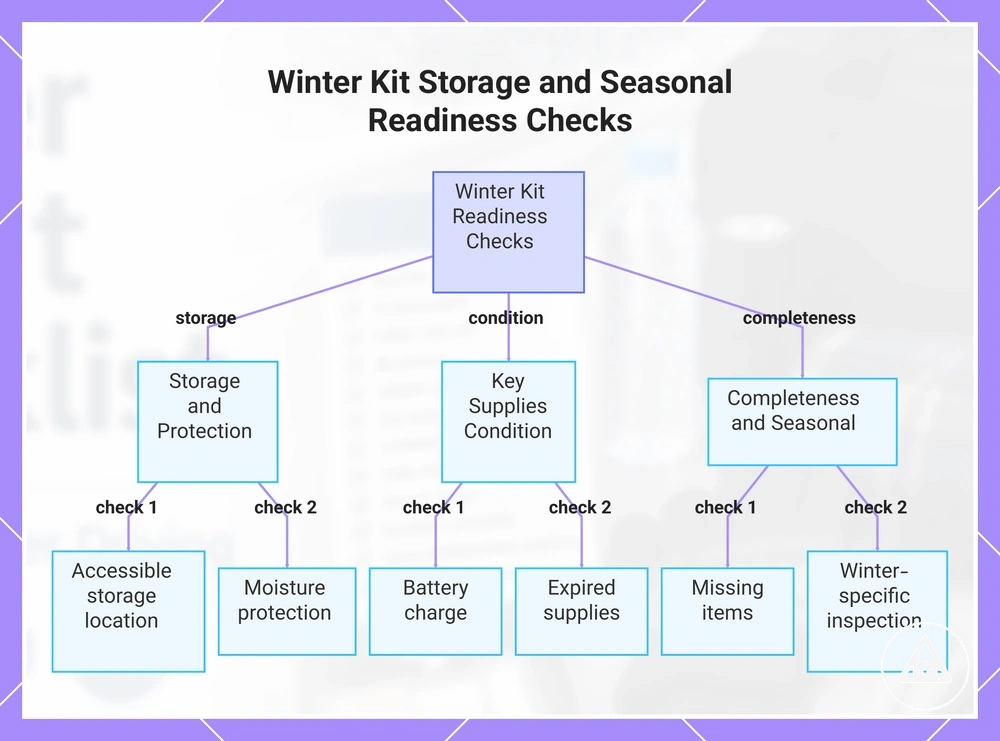
Winter kit storage and seasonal readiness checks help maintain access, completeness, and condition control before cold-weather driving begins. A winter kit that is difficult to reach, missing key items, or affected by moisture may provide less support when needed. Seasonal readiness checks are most effective when paired with a planned refresh timing routine.
Check winter kit storage, item condition, and replacement needs before cold-weather driving starts. Battery charge, expired supplies, missing items, and cold-sensitive contents should be reviewed as part of a seasonal refresh. Criteria for refreshing kit items include replacing expired, missing, damaged, or cold-sensitive supplies when inspection shows reduced readiness.
Winter kit storage and seasonal readiness checks should verify access, condition, and replacement timing before winter conditions become more demanding. The seasonal mini-checklist below focuses on readiness attributes that commonly require inspection or refresh.
- Storage location: Keep the kit in an accessible storage location so winter conditions do not delay access when roadside support is needed.
- Moisture protection: Inspect containers and storage areas for moisture exposure because damp conditions may affect kit readiness over time.
- Battery charge: Check flashlight and power bank battery charge before winter driving and recharge items that may have lost stored power.
- Expired supplies: Review first aid and other time-sensitive supplies and replace expired supplies during a seasonal refresh.
- Missing items: Compare kit contents against the intended checklist and replace missing items before winter travel begins.
- Food and water replacement: Inspect stored food and water and replace items when storage limits, age, or winter conditions may affect suitability.
- Winter-specific inspection: Check winter-specific items for condition, accessibility, and seasonal relevance before colder weather arrives.
Storage and replacement checks support kit readiness, but condition changes can still occur because of temperature shifts, moisture, and storage duration. Replacement timing may depend on local climate, storage conditions, and item type.
A practical seasonal refresh focuses on keeping the winter kit accessible, complete, and ready for use before cold-weather travel begins. Regular winter kit checks help maintain readiness without expanding into full vehicle maintenance.
The products below are useful examples for comparing available options. Before buying, check that the compatibility criteria, key features, and product details match your needs.
This chart shows the main categories of winter kit readiness checks, covering storage protection, key supplies condition, and completeness with seasonal items.